

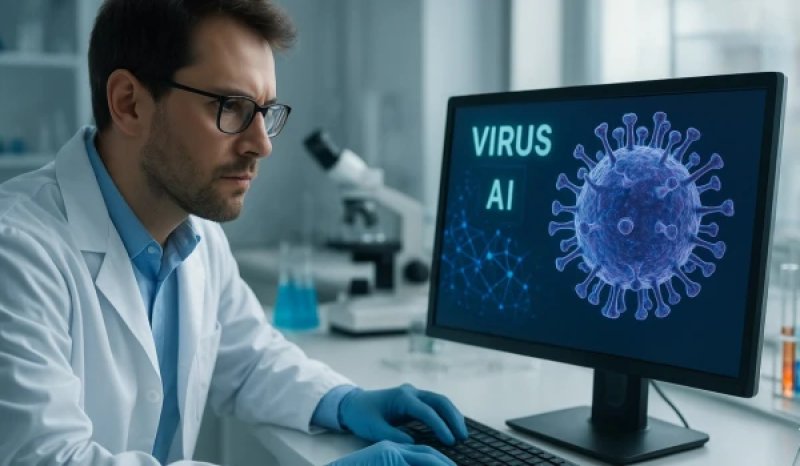
American scientists have for the first time used artificial intelligence to create complete viral genomes. In the course of the experiment, researchers managed to obtain 16 viable bacteriophages — viruses that infect bacteria — which effectively destroy Escherichia coli. To conduct the work, specialists trained artificial intelligence models on genetic data from viruses, bacteria, plants, and humans. The system then independently proposed several variants of viral genomes, from which the scientists selected the most promising ones. Some of the viruses created by AI were found to be capable of reproducing and destroying bacteria under laboratory conditions. Researchers hope that such technologies will help develop new treatments for antibiotic-resistant infections. However, the experiment also demonstrated that artificial intelligence is already capable of designing biological systems that did not previously exist in nature. As noted by **BBC**, this fact has raised serious concerns among biosecurity experts. According to them, the main question today is no longer whether artificial intelligence can create a new viral genome, but how to prevent the misuse of such technologies. Experts warn that in theory, such tools could be used to develop pathogens with predetermined properties. The potential threat could arise from both accidental leaks of such developments from laboratories and their intentional use. The authors of the study emphasize that additional safety measures were taken during the work. Viruses capable of infecting animals and humans were excluded from the database, experiments were conducted only with bacteriophages, and all research took place in a secure laboratory environment. Nevertheless, scientists believe that as artificial intelligence develops, existing control mechanisms may prove insufficient. In their opinion, it is already necessary to develop new international biosecurity regulations that will allow the use of AI capabilities for drug creation without allowing the emergence of technologies that could pose a threat to humanity. The authors of the study emphasize that the technology itself does not pose an immediate danger, but its rapid development requires enhanced international oversight. They believe that only strict biosecurity standards will allow the use of artificial intelligence in medicine without the risk of new biological threats emerging.