

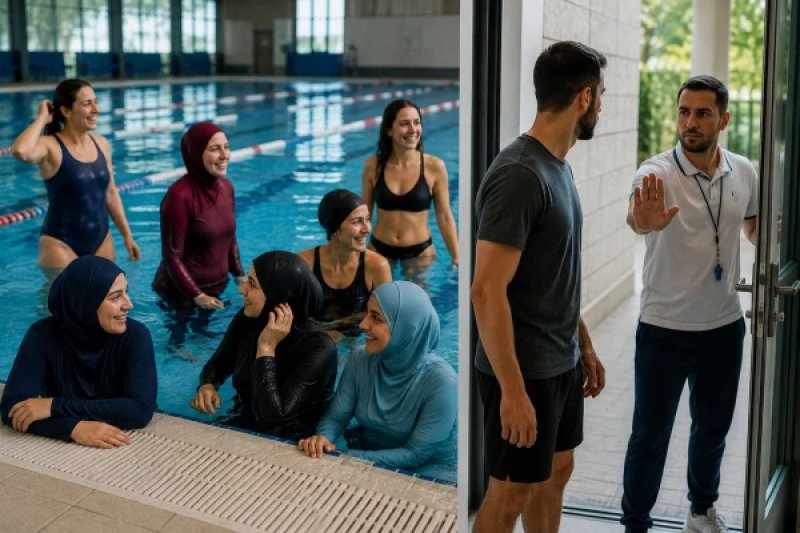
In the municipal pool Tor Tre Teste in Rome, a two-hour session was held for the first time, during which access was allowed exclusively for women. The initiative was proposed by the Islamic Community of Rome. About 40 female visitors attended the first evening session. Among them were women in bikinis, burkinis, hijabs, and regular sportswear. Men were prohibited from entering the pool during this time. This decision sparked political debates. Representatives of right-wing parties criticized the initiative, stating that such measures are a concession to religious demands and could lead to the actual implementation of Sharia norms in public life. Supporters of the project disagree with such accusations. They emphasize that the women’s hours were organized after the regular operating hours of the pool, so no regular visitors lost the opportunity to swim. The organizers also note that these sessions are intended not only for Muslim women. Any woman, regardless of religion or beliefs, can visit the pool. According to representatives of the Islamic Community, the idea arose for those who, for religious, personal, or psychological reasons, do not want to be in a swimsuit next to men. This also concerns women who have experienced violence, feel discomfort about their appearance, or simply wish to spend time without outside gazes. During the first session, a minor incident occurred. Italian blogger Simone Carabella purchased a regular ticket and attempted to stay in the pool until the women’s time began. After being asked by staff, he left the premises. The police had been notified in advance about a possible provocation, but intervention was not required. Initially, it was planned to hold two women-only sessions daily — in the morning and in the evening. However, the morning session from 7:30 to 9:30 was canceled due to insufficient interest, while the evening session was fully booked. The story of the Roman pool has gone far beyond the usual organization of leisure activities. It has once again raised the question for Italian society about where the line is drawn between the integration of different cultures and the creation of separate rules for different population groups. While some see the project as an additional opportunity for women, others fear that such a practice could be the beginning of the division of public spaces based on gender and religious criteria.