

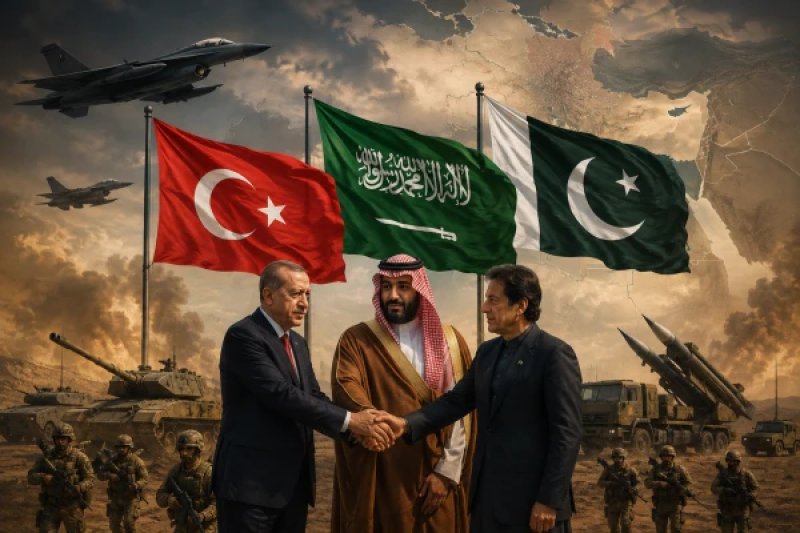
The signing ceremony was attended by Saudi Arabia's Crown Prince Mohammed bin Salman, Turkish President Recep Tayyip Erdoğan, and Pakistani Prime Minister Shehbaz Sharif. According to Reuters, the parties have been negotiating the agreement for about a year. The agreement aims to strengthen collective defense, deter potential aggression, and enhance regional security. A Turkish representative told Reuters that the treaty is defensive in nature and is not directed against any specific state. According to him, the document is open for other countries to join. The mechanism for providing military assistance and the specific volume of commitments from the participants have not yet been disclosed. The signing of the treaty took place against the backdrop of a sharp escalation of the situation in the Middle East. The conflict involving the United States, Israel, and Iran has led to serious restrictions on shipping through the Strait of Hormuz, through which a significant portion of the world's oil and gas supplies previously passed. For Saudi Arabia, the issue of security is particularly significant due to missile and drone attacks by Iran on the territory of the kingdom. Saudi Arabia, Turkey, and Pakistan have a combined total of 1.2 million military personnel. They are armed with about 4,000 tanks and more than 700 combat aircraft. The combined defense spending of the three countries amounts to $125 billion per year. In terms of personnel, the armies of the three countries are comparable to India, and in terms of military spending, they rank alongside the largest military powers in the world. The three signatories already have close ties in the defense sector. Saudi Arabia and Pakistan signed a bilateral mutual defense treaty in September 2025. Ankara supplied Islamabad with four Ada-class corvettes, upgraded Pakistani submarines, and JF-17 fighter jets. Riyadh purchased Turkish Bayraktar Akıncı strike drones. The new format brings together three states with different military capabilities. According to Mansoor Ahmed from the Australian National University, Turkey and Pakistan can provide advanced defense technologies and manufacturing capabilities to the partnership, while Saudi Arabia can ensure investments. Abdulaziz Sager, chairman of the Saudi Gulf Research Center, believes that the agreement will enhance the influence of the three countries on the regional security architecture, reports The Moscow Times.