

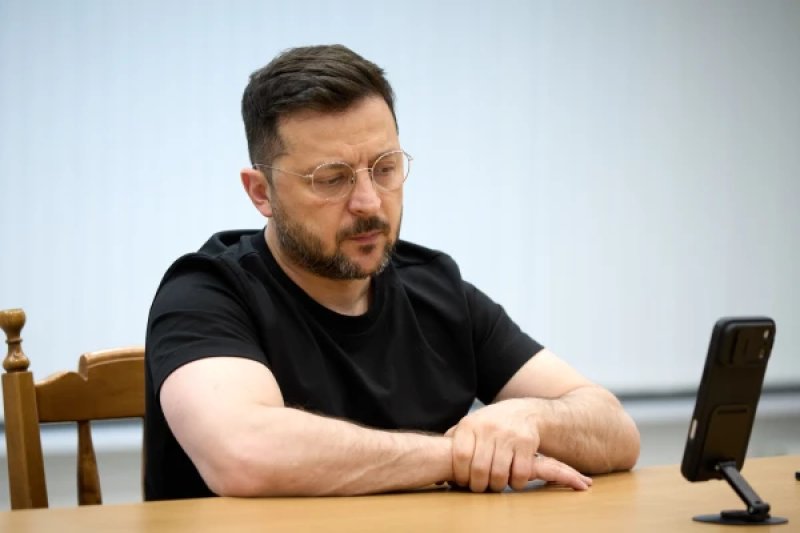
As the authors of the publication note, at the beginning of summer, Ukraine seized the initiative in the war for the first time in a long time. Kyiv demonstrated successes on the front to its Western partners, advancements in drone technology, and strikes on Russian infrastructure. Against this backdrop, Trump's tone towards Zelensky also changed. After talks in Turkey in early July, the American president spoke positively about his meeting with the Ukrainian leader. "There was a lot of love in that room, a lot of unity," the publication quotes Trump, characterizing the atmosphere after the negotiations. At the same time, a significant role in improving relations between Kyiv and Washington was played by Ukraine's ambassador to the U.S., Olga Stefanishina. She sought to present Ukraine not only as a state asking for military assistance but also as a partner capable of offering the United States its own technological and military solutions. Ukrainian drone technology became particularly convincing. The authors specifically mention Ukrainian interceptor drones, which even caught the Pentagon's interest. "Now everyone in Washington thinks Ukraine will win," the authors quote one of the Republican strategists. According to him, Americans saw the Ukrainian drones and wanted access to such technologies themselves. However, the positive dynamics quickly changed. During his last meeting with Zelensky, Trump did not agree to provide Ukraine with additional Patriot systems necessary for defense against Russian ballistic missiles. The American president also backtracked on his previous promise to allow Ukraine to produce these systems independently. At the same time, problems related to corruption intensified in Kyiv. Defense Minister Mykhailo Fedorov, whom Ukrainians viewed as a fighter against corruption in the defense sector, was dismissed. The aforementioned ambassador to the U.S., Olga Stefanishina, returned to Kyiv amid accusations of illegal enrichment. Another issue remains Starlink. Zelensky asked Trump to reach out to Elon Musk to open access to Starlink for Ukrainian strikes on Russian missile batteries in the border zone of the Russian Federation. However, Kyiv has not yet received a positive response. As a result, The Atlantic writes, in just a few days, Ukraine lost a significant portion of the diplomatic and military momentum that had been building for months. Trump effectively stalled on previous promises regarding Patriot, negotiations with Musk yielded no results, Fedorov's dismissal sparked protests in Kyiv, and Ukraine was left without an ambassador in Washington. Meanwhile, Russia intensified missile strikes on Kyiv, taking advantage of the lack of Ukrainian air defense. In early August, at least two dozen ballistic missiles attacked the capital and its suburbs in one night. Ukrainian forces were unable to shoot down any of them. Seventeen civilians were killed, and at least 44 others were injured. **The War in Ukraine: Strategic Dimension** As the UNIAN news agency reported, a similar assessment of the current situation in the war was given by German military analyst Julian Röpke. After a trip to Ukraine, he noted that the restrained optimism among Ukrainian military personnel has largely disappeared, as strikes on Russian logistics did not yield the expected strategic effect. Despite record losses, the Russian army continues its offensive, actively using kamikaze drones, aerial bombs, and ballistic missiles to systematically destroy Ukrainian rear hubs. According to Röpke, Ukraine is actively modernizing its army, developing robotic systems and drone technologies, but a strategic breakthrough on the front has not yet occurred, UNIAN summarizes.