

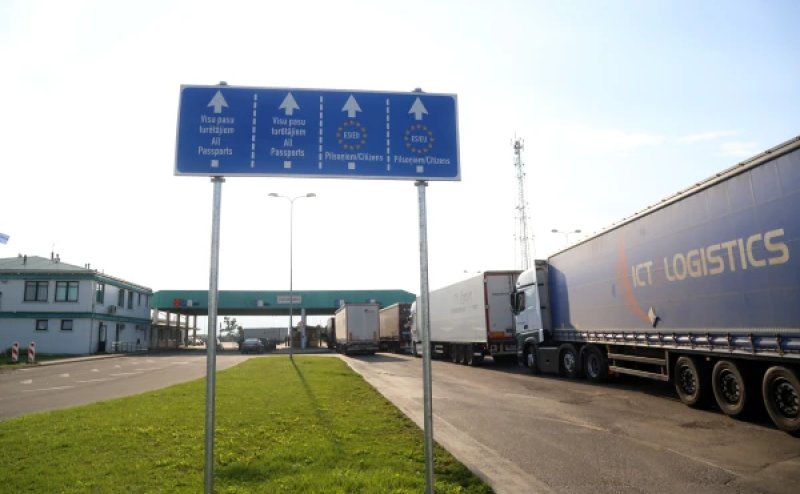
Temporary technical problems at the 'Paternieki' border crossing did not in themselves signify a political crisis. However, the situation quickly took on a political character after numerous conflicting versions of events emerged in the information space. As indicated by an analysis of approximately 300 publications on Telegram conducted by the LETA agency, a key role was played by the information vacuum that arose between the report of the glitch and subsequent official clarifications. During this period, claims began to circulate on social media about an alleged secret closure of the border, reports emerged about families stranded in the neutral zone, theories were discussed regarding the preparation for a complete closure of the eastern border, and two opposition parties demanded the resignation of Interior Minister Janis Dombrovskis. At the same time, the technical glitch itself was subsequently resolved, and the border crossing resumed operations. However, by that time, a different interpretation of events had already formed in the public space. The authors of the analysis emphasize that the Interior Minister was not the cause of the technical malfunction. At the same time, they note that the communication from the Ministry of the Interior and the minister himself may have contributed to the perception that the temporary technical problems were a premeditated political decision. Even before the border checkpoint ceased operations, issues of hybrid threats, security, and possible travel restrictions to Belarus were actively discussed in the public space. These messages then received their own interpretations in several Telegram channels. Importantly, warnings about risks and reports of technical malfunctions are different things in themselves. However, if these events follow one after another without clear explanations, part of the audience begins to perceive them as elements of a unified plan. According to the authors of the analysis, it was precisely the lack of a clear answer to the question of what exactly happened—a technical malfunction, a temporary halt in operations, or a change in state policy—that created a favorable environment for the spread of alternative versions. The study also notes that similar interpretations of the situation quickly spread among various Telegram channels. For instance, even before the actual halt of operations at the border crossing, one of them published information about an alleged imminent closure of 'Paternieki'. The authors of the analysis do not draw conclusions about centralized coordination of such publications; however, they believe that the situation serves as an example of how insufficiently clear official communication can turn a local technical incident into a large-scale political narrative.