

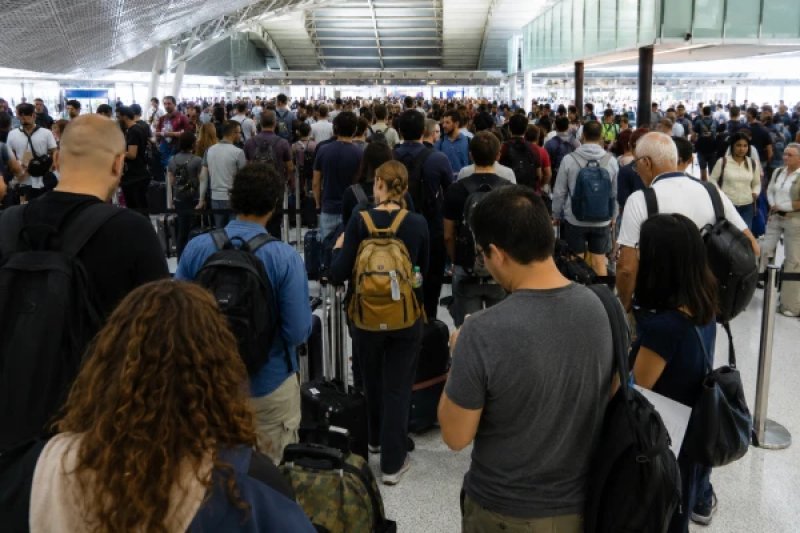
This is not about the cancellation of the EES, but rather a temporary measure provided for by European regulations. If the flow of passengers becomes too large and the registration of biometric data leads to significant delays, the airport may temporarily suspend the operation of the system. Such practices are already being implemented at the largest airports in Paris and Amsterdam. Similar measures are being used in Frankfurt, Brussels, and Milan. Currently, the possibility of temporarily disabling the EES is allowed until September 6, 2026. However, nine countries have already asked the European Commission to extend this mechanism. Among them are Italy, France, Germany, Belgium, the Netherlands, Greece, Malta, Portugal, and Switzerland. The EES system is intended for citizens of non-EU countries who arrive in Schengen Area states for up to 90 days within a 180-day period. It automatically records the entry and exit of travelers using biometric data and is meant to completely replace traditional passport stamps. The gradual implementation of the system began in the fall of 2025, and the EES became fully operational on April 10, 2026. For passengers, this means that in one airport, registration may occur under the new system and take more time, while in another, biometric control may be temporarily disabled during high traffic. Therefore, the absence of the EES procedure when crossing the border does not mean that the system has been canceled or that the entry rules have changed. The European Commission acknowledges that technical difficulties arise at the initial stage, but considers them temporary. According to estimates from Brussels, after the adjustment period, passing through control using the EES should take about 10–15 minutes. So far, the experience of summer 2026 shows the opposite: the digitalization of border control during peak hours sometimes leads to such delays that airports have to temporarily revert to the previous working scheme. Those flying through Milan, Paris, Amsterdam, or other major European airports this summer are advised by experts to allow extra time for passport control.