

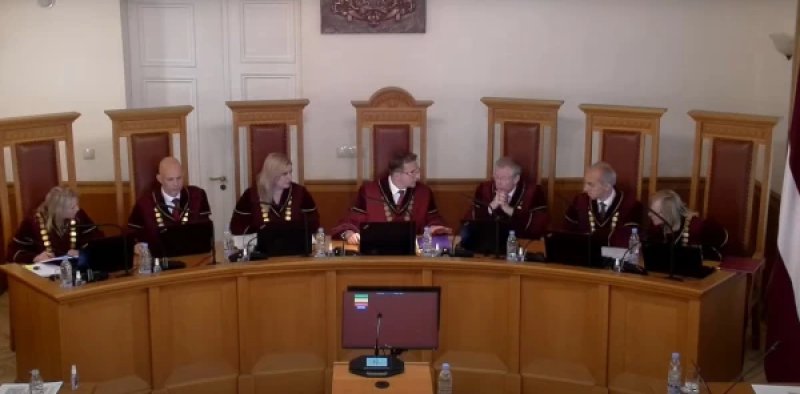
The Prosecutor General's Office of Latvia has initiated an investigation regarding the possible non-fulfillment of a decision by the Constitutional Court concerning the procedure for compensating landowners. The verification process was opened on July 17 at the request of the Prosecutor General. The impetus was the Constitutional Court's decision from December 10, 2025, which mandated the parliament to adopt new regulations by June 1, 2026. The Prosecutor's Office has already sent a request to the Legal Commission of the Saeima. The agency is asking whether the parliament has complied with the court's decision within the stipulated time. If not, it is necessary to explain the reasons for the delay, provide information on the progress of the bill's preparation, and indicate the expected timeline for its adoption. This concerns a situation where landowners receive such low compensation for the legal use of their plots that after paying property tax, the compensation becomes disproportionately small or does not cover the tax amount at all. The Constitutional Court recognized that such cases require additional protection. The court concluded that the existing regulation does not ensure a fair balance between the interests of landowners and the owners of buildings located on those lands. In fact, the parliament has already begun to implement the court's decision. In June, the deputies supported amendments to the Law on Compensation for Legal Use of Land in the first reading. The bill stipulates that landowners will be able to demand compensation from the state if the payment for land use does not cover the property tax or if they have incurred financial losses due to existing property rights restrictions. However, the document has not yet been finally adopted. For the new rules to come into effect, the amendments must pass second and third readings in the Saeima. Thus, the investigation by the Prosecutor General's Office does not imply the initiation of a criminal case. At this stage, the agency is determining why the Constitutional Court's decision was not executed within the established timeframe and when the parliament intends to complete the adoption of the necessary regulations.
