

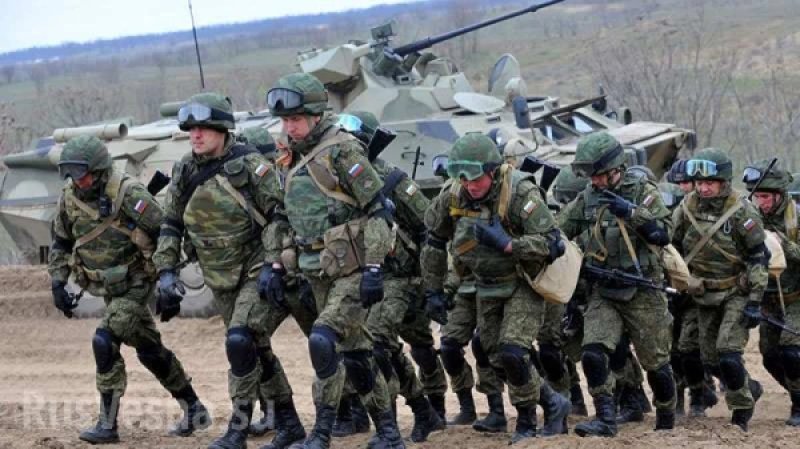
Stavridis published his analysis in a column for Bloomberg, warning that Moscow may intensify efforts in the coming years to test the alliance's readiness to respond to various provocations. According to the admiral, Russia's pressure on Europe could manifest in different ways — from cyberattacks and sabotage against critical infrastructure to military provocations. He also considers the possibility that Russian weapons could "accidentally" end up on NATO territory. Stavridis does not rule out further nuclear blackmail and even the relocation of Russian nuclear weapons to the western regions of the country or to Belarus. However, one of the scenarios he mentioned is particularly concerning for the Baltic states — the use of unmarked Russian special forces. Such a scenario would not be entirely new in Russian military practice. The use of unmarked servicemen became especially well-known after the Russian forces' invasion of Crimea in 2014. This tactic allows the state to initially deny its involvement while simultaneously creating uncertainty about the true nature of events. Stavridis believes that Russia's main goal in this case would be not only to create a physical threat but also to test how unified NATO's response would be. In his assessment, Moscow wants to intimidate European countries, fracture the alliance, and weaken Western support for Ukraine. Meanwhile, from a military capability standpoint, NATO still possesses significant advantages, the admiral notes. Therefore, he urges the alliance not to wait for a potential Russian provocation but to prepare for it in advance. Stavridis advises NATO to continue and expand large-scale military exercises to make it clear to potential adversaries that the alliance is capable of responding quickly and in a coordinated manner. Against the backdrop of such threats, the Baltic states are already strengthening the protection of critical infrastructure. Reuters reported this week that Latvia, Lithuania, and Estonia have increased security measures at strategically important sites, fearing a possible Russian hybrid attack or provocation.
