

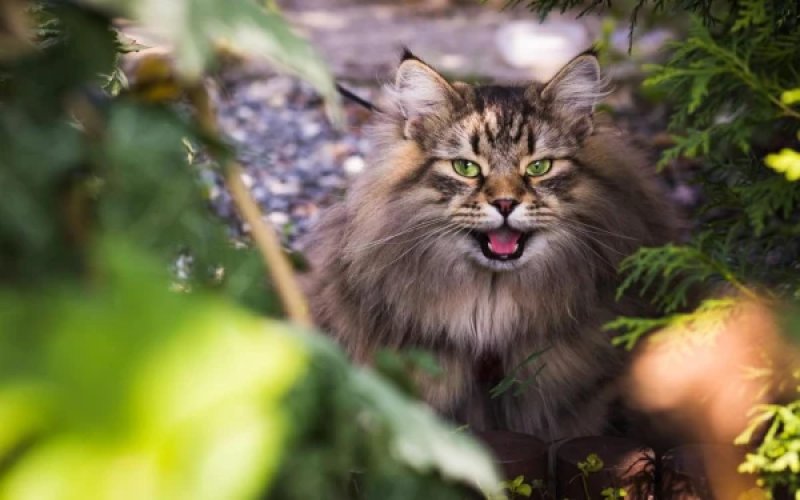
Why cats meowCats have lived alongside humans for several thousand years. It is not surprising that they have developed their own system of communication through sounds. Usually, furry friends meow to attract attention or simply out of boredom. However, there are also more serious reasons, such as a call for help. Why a cat meows for no reasonIf you cannot find the source of such behavior, observe the animal. Perhaps something from our list will help identify the root of the problem. A cat meows for no reason: physiologyNatural reasons for constant “talking” can include: * Hunger or thirst — if the pet's bowl is empty, a loud “meow” means only one thing — a desire to fill the stomach. An acute hunger pang usually occurs early in the morning when the owners are sound asleep. * Mating instinct — behavior depends on gender. For example, a male cat marks its territory, while a female cat rolls on the floor and raises her tail. However, both meow loudly and longingly so that a potential mating partner can hear them. * Need to go to the bathroom — cats are known for their cleanliness, and desperate meowing may indicate that it is time to change the litter in the box. Once the source of anxiety is removed, the meowing should stop. A cat meows to attract attentionIf the pet is well-fed and healthy, constant meowing may mean: * A call for help — for example, kittens often call their owner if they get stuck somewhere (under the couch, in the closet) or want to enter a closed room. * Lack of attention — domestic cats are social animals, and the absence of interaction with their owner is hard for them to bear. With loud sounds, they call to be picked up or to play. Why a cat walks and meows: pain or discomfortMeowing is often caused by digestive problems or stomach pain. But there can be other reasons: Injuries — not all injuries are visible to the human eye; some can be detected through ultrasound or X-ray.Cystitis — in advanced cases, blood may appear in the urine.Poisoning — accompanied by vomiting, fever, and diarrhea.Helminthiasis — the presence of parasites causes significant distress to the animal. In severe cases, worms can be seen around the anus.Fleas or ticks — when pests become numerous, constant itching prevents the cat from resting and causes anxiety.Infections caused by viruses or bacteria — may manifest as general malaise, lethargy, loss of appetite, and high fever.Post-operative consequences — cats often meow when waking up from anesthesia. Animals can endure pain for a long time. If a calm pet suddenly starts to meow loudly and insistently, it may mean that the discomfort has reached its maximum. Negative emotionsIt is possible that an unpleasant situation has occurred, and meowing is a way to express their feelings: Fear — what seems ordinary to humans can frighten an animal. For example, the sounds of a vacuum cleaner, repairs, or heavy objects falling to the floor. Usually, meowing stops when the irritating factor disappears. Irritation — not all cats like to be petted without permission. In response to a violation of personal space, they may meow loudly, bare their teeth, and even claw at the hand.