

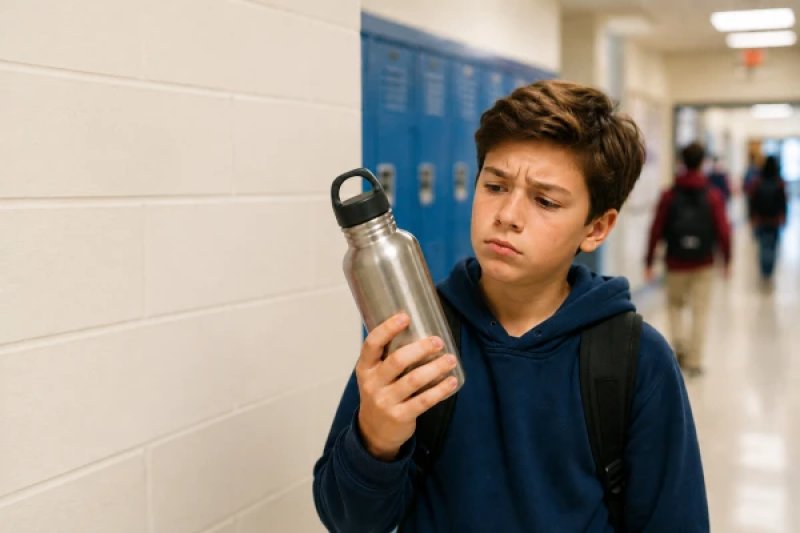
As [reported](https://nypost.com/2026/08/15/us-news/nj-school-district-banning-metal-glass-water-bottles/) by the New York Post, new rules are being implemented in the public schools of Howell Township for the 2026/2027 academic year. Parents of students were informed about the ban in a special letter sent out by the school district administration. The restrictions apply to metal and glass bottles, thermoses, and cups. School officials explain the decision primarily with safety considerations. "Metal and glass bottles, thermoses, and cups are hard and heavy items that can cause serious injury if thrown, swung, or used during conflicts between students," the letter, signed by Board of Education President Jennifer Ockerson and Superintendent Joseph Isola, states. The administration claims that incidents involving such containers have already caused safety issues and injuries. That is why the district decided to take additional measures to protect students and staff. The rules also outline specific consequences for violators. If a student is caught at school with a prohibited bottle or cup, the item must be surrendered to the school administration. In some cases, parents or guardians will have to come to the school in person to retrieve it. However, the decision has not been well received by all parents. Kristin Bastardi created a petition demanding the return of the ability to use metal and glass bottles in Howell schools after receiving the letter. The initiative quickly gained support — over a thousand people have already signed it. Bastardi explained that her family, like many others, consciously prefers glass and metal containers due to their environmental and, in her opinion, potential health benefits. Parents are particularly concerned about the necessity of using plastic bottles. The petition author referenced studies indicating that some types of plastic can leach chemicals into water, including bisphenol A — BPA. Additionally, Bastardi points out the environmental aspect of the issue. Metal and glass bottles can be reused, are durable, and help reduce single-use waste. Plastic containers, on the other hand, are becoming one of the sources of environmental pollution. A significant portion ends up in landfills or in oceans, where plastic waste poses a threat to wildlife and ecosystems. At the same time, parents are proposing not just to lift the ban but to find a compromise between safety and the ability to use reusable containers. Bastardi believes that schools could establish certain requirements for metal and glass bottles and check whether the containers brought by students meet established safety standards. In her opinion, educational programs on responsible consumption and eco-friendly habits could also be conducted in schools. The Howell school district includes 12 educational institutions, serving children from preschool age to eighth grade. Therefore, the new rules will affect a large number of families. So far, the administration has not indicated any intention to reconsider the decision. Thus, at the beginning of the new school year, the familiar reusable metal or glass bottle may become a prohibited item in Howell schools: the administration considers the potential risk of injury a more serious argument, while parents demand a solution that does not force children to switch to plastic.
