

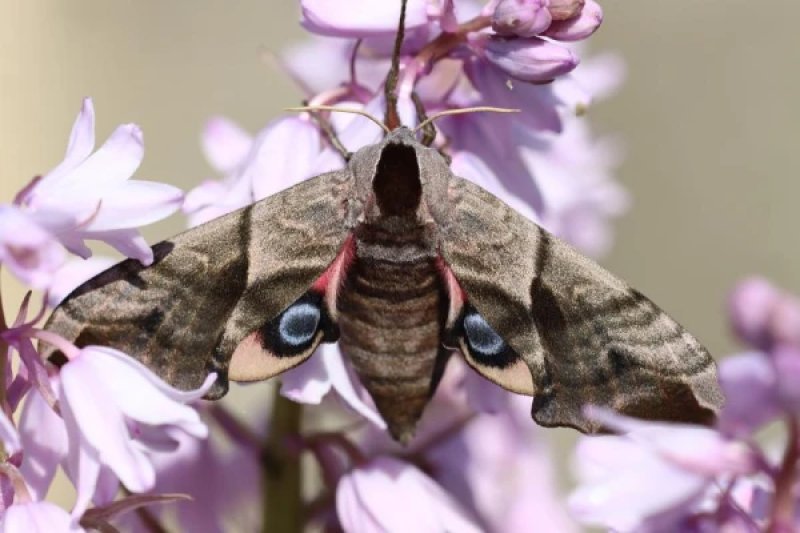
For a long time, it was believed that migrating insects primarily move under the influence of the wind. However, increasing evidence points to the presence of navigational abilities in insects. For example, one of the most well-known migrating insects, the death's-head hawkmoth, is capable of maintaining a straight flight path even in strong winds. These moths can adjust their course, as reported by Science Alert. The new abilities of the moths were revealed using micro-transmitters attached to individual specimens. This allowed entomologists to track their movements during migration. The scientists observed 14 hawkmoths for four hours — enough time for a migratory flight. A plane with signal receivers tracked the moths, determining their location every 5-15 minutes. The moths flew purposefully, with some covering nearly 90 km in four hours. They also demonstrated various strategies to cope with adverse weather conditions. When a favorable tailwind blew, the hawkmoths flew with the wind, heading towards their destination or slightly altering their course to maintain control over their trajectory. In headwinds and crosswinds, the moths flew low to the ground and directly into the wind, adjusting their path to stay on course. They also increased their speed to maintain the correct direction. The hawkmoth inhabits Europe; however, little is known about its migratory behavior and hibernation. Adult moths typically appear in Europe in the spring and migrate to Africa during the cold season. Scientists still need to determine what mechanisms help the moths stay on track.
