

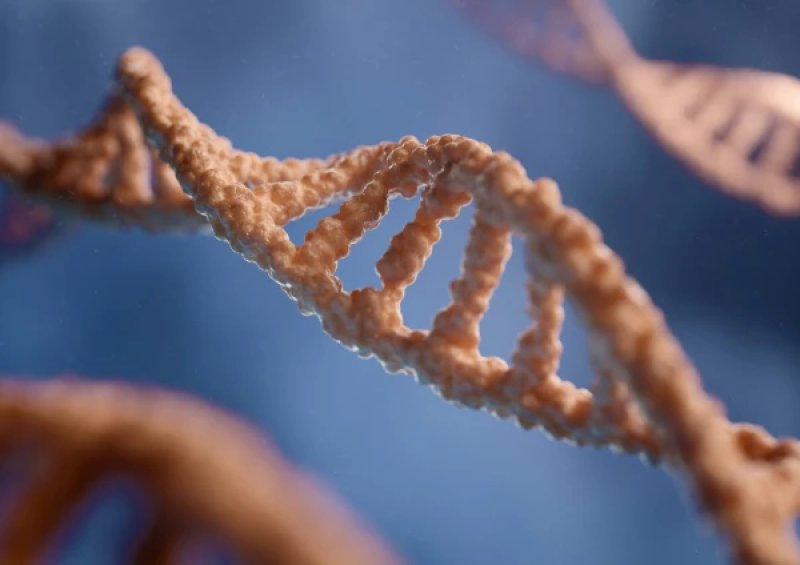
The search for signs of life beyond Earth has long gone beyond looking for water or habitable planets. Today, scientists are increasingly finding chemical compounds in space that could have formed the basis for the emergence of living organisms, writes [Live Science](https://www.livescience.com/space/which-building-blocks-of-life-have-been-found-in-space-and-which-havent). The most impressive results have come from sample-return missions from asteroids. For instance, in the materials from asteroid Bennu, delivered to Earth in 2023, researchers discovered all five nitrogenous bases that make up DNA and RNA, as well as 14 of the 20 amino acids used by living organisms. Similar results were obtained from samples from asteroid Ryugu, where all five nitrogenous bases were also found, including uracil — one of the components of RNA. However, the search for the building blocks of life is not limited to asteroids. Radio telescopes allow the detection of organic molecules in giant clouds of gas and dust where new stars are born. According to astrobiochemist Sergio Joppa from Aarhus University, scientists currently know about 350 different molecules discovered in space. Of these, approximately 180 belong to the so-called complex organic molecules (COM) — compounds that contain carbon and consist of at least six atoms. Not every such molecule is related to life, but about 30 of them are considered promising "prebiotic" candidates — substances that could have participated in the emergence of the first living systems. One of the most interesting discoveries in recent years has been erythrose — the first true sugar found in space. It was identified in molecular clouds in the center of the Milky Way by specialists from the Center for Astrobiology in Spain. Such clouds are considered unique chemical laboratories of the universe, where complex organic compounds can form under extremely low temperatures and almost complete absence of pressure. However, the capabilities of modern astronomy have their limits. Each molecule leaves a unique spectral "fingerprint" by which it can be recognized. But the more complex the compound, the more its spectral lines begin to overlap with the lines of other molecules. "When it comes to larger molecules, it becomes practically impossible to distinguish one from another, as their spectra turn out to be identical," explains Joppa. Therefore, scientists suspect that there are much more complex compounds in space than those that can currently be confidently identified. One of the main goals today remains the search for ribose — a sugar that is part of RNA. If it can be discovered, it would be a significant argument in favor of the idea that almost all the essential chemical components of life can form even before the birth of stars and planets. At the same time, researchers emphasize: the discovery of the building blocks of life does not mean that life itself has already been found. "These are very small molecules. I don’t want anyone to think that we have already discovered life," notes astrobiochemist Isaskun Jimenez-Serra. Nevertheless, such discoveries are gradually changing scientists' perceptions of the prevalence of the necessary substances for life in the universe. According to Joppa, even if amino acids are someday found, for example, directly on the surface of Mars, it would still be an outstanding discovery, as complex organic compounds would have had to survive billions of years of exposure to high temperatures, cosmic radiation, and other destructive factors. The next stage of research is associated with new space missions. Currently, nearly ten projects are either underway or in preparation. Among them is the Japanese mission Hayabusa2, which, after successfully delivering samples from asteroid Ryugu, is heading to new targets, as well as the Chinese mission Tianwen-2, which launched in 2025 to collect soil from asteroid Kamoaleva. Researchers hope that future samples will allow the discovery of even larger organic molecules — perhaps one day fragments of RNA will even be found. For now, scientists can confidently say one thing: the chemical ingredients necessary for the emergence of life are widespread in the universe. But whether life itself exists anywhere else besides Earth remains unanswered.
