

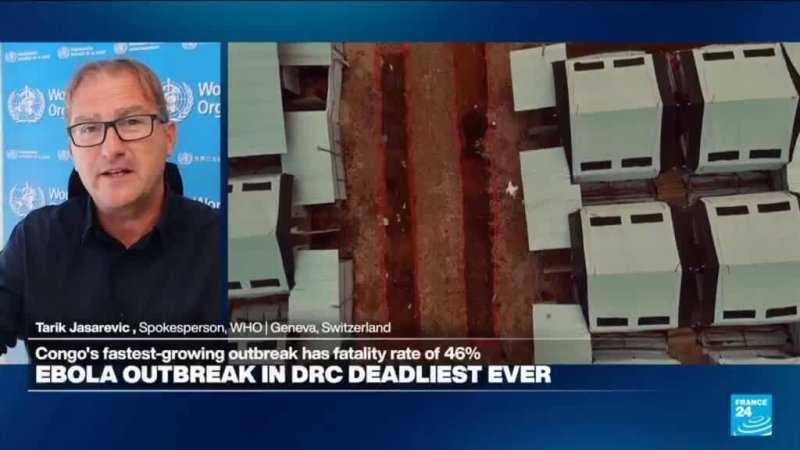
Eve Irvine is pleased to welcome WHO Spokesperson Tarik Jašarević. His central concern is that we do not yet know where all the places the Ebola virus is circulating: infected people remain outside treatment centres, transmission chains go undetected, and patients who seek care too late face much poorer chances of survival. The scale and lethality of this Ebola outbreak reflect a public-health response that is still struggling to catch up with transmission. Conflict, population mobility and other humanitarian pressures make surveillance more difficult, but community engagement is equally crucial. Without trust and cooperation, testing, contact tracing, safe burials and early treatment cannot work effectively. Candidate vaccines and therapeutics may eventually strengthen the response, but they cannot substitute for the immediate task: identifying where the virus is, bringing infected people into care and giving local health authorities the resources they need to interrupt transmission.
