

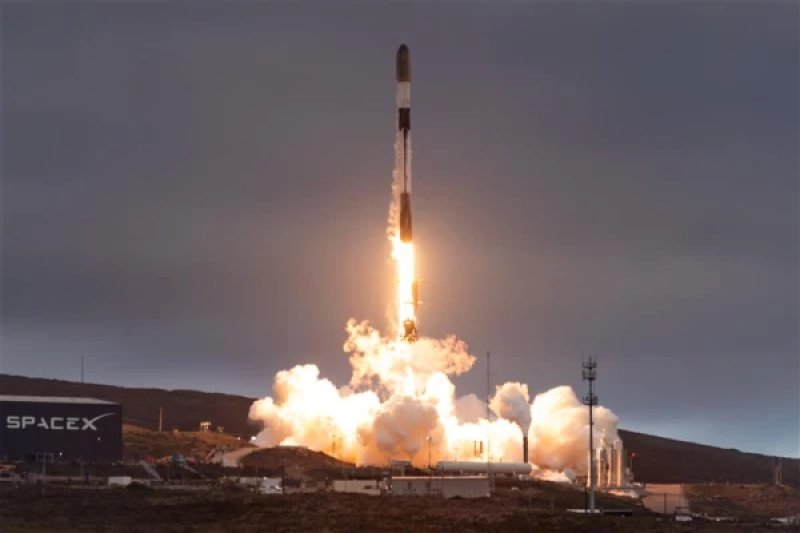
SpaceX has once again set a new world record for the speed of space launches, writes [IFLScience](https://www.iflscience.com/spacex-broke-yet-another-world-record-last-weekend-with-the-launch-of-two-more-falcon-9-rockets-84387). On the evening of August 15, two Falcon 9 rockets were successfully launched, with the interval between launches being just over 38 minutes. The first launch took place at 9:12 PM Eastern Time from the Space Force base at Cape Canaveral in Florida. By 9:50 PM, the second Falcon 9 launched from Vandenberg Space Force Base in California. Thus, SpaceX surpassed its own achievement set in August 2024, reducing the gap between the two launches by 27 minutes. Both missions were carried out using the partially reusable Falcon 9 rocket. After separation, the first stage returns to Earth and can be reused, significantly lowering launch costs. This time, the booster that launched from Florida successfully landed at Cape Canaveral, while the first stage of the second rocket landed on the autonomous drone ship Of Course I Still Love You in the Pacific Ocean. Deployment of @Globalstar 2-R satellites has started pic.twitter.com/SMx1j1hLjF— SpaceX (@SpaceX) August 16, 2026 Despite using the same rocket, the missions had different objectives. The first Falcon 9 launched eight telecommunications satellites into orbit as part of the Globalstar 2-R Launch 1 project. The second mission, USSF-366, was conducted on behalf of the United States Space Force. The details of the launch are classified, but it is believed that a military satellite or other equipment was placed into low Earth orbit. The high frequency of launches has long been a hallmark of SpaceX. According to NextSpaceFlight, the company has already completed 709 space launches, with 99 of them occurring in 2026 alone. A significant portion of these missions is related to deploying satellites that provide communication, navigation, banking operations, weather forecasting, scientific research, and defense systems. Thanks to projects like Starlink, the number of satellites around Earth continues to grow rapidly. Experts estimate that today there are already more than 18,000 satellites in orbit, which is more than double the number from a decade ago. This brings obvious advantages. Satellite internet is already providing connectivity in remote regions of the world where it was previously almost unavailable. However, experts are increasingly warning about the negative consequences. The increase in the number of satellites complicates astronomical observations, raises the risk of collisions in orbit, and contributes to the accumulation of space debris. According to scientists, the probability that at least one incident resulting in injury or death to a person due to falling space debris will occur within the next ten years is already around 10%. In comparison, throughout the history of space exploration, there has been only one officially confirmed case of a person being harmed by falling debris from a spacecraft. Each new launch only slightly increases this risk, but with the current pace of development in the space industry, the issue of safety in near-Earth space is becoming increasingly relevant. SpaceX's new record demonstrates how rapidly modern space exploration is advancing, while also reminding us that with the increase in launches, humanity will need to find new ways to make near-Earth orbit safer.
