

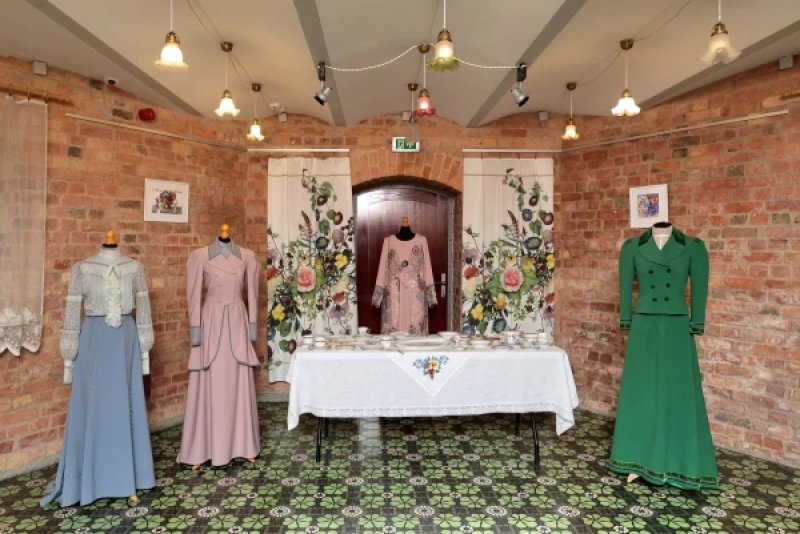
Miliere gained professional experience in Latvian theaters and has been collaborating with the Riga Art Nouveau Museum since 2016. In creating each outfit, the artist strives to accurately reproduce the features of early 20th-century fashion — from the characteristic cut and choice of fabrics to the smallest details of decoration. Over time, the costumes she created have become part of the recognizable image of the museum itself. They help visitors not only to view the interiors and objects of that era but to literally immerse themselves in the atmosphere of Riga during the peak of Art Nouveau. The exhibition shows how diverse fashion was at that time. It features luxurious outfits of urban ladies, everyday clothing, and servant costumes. Visitors will see elegant dresses and women's suits, skirts and blouses, aprons and outerwear. Special attention is paid to details that are essential to the fashion of the modern era. Lace, decorative fasteners, cuffs, brooches, belts, ruffles, embroidery, and meticulously crafted pleats allow one to appreciate not only the aesthetic side of the costume but also the level of craftsmanship required for its creation. Moreover, many of the presented outfits cannot be called ordinary museum exhibits. They continue to "live": museum staff wear historical costumes while greeting guests, conducting tours, and participating in various events. This allows visitors to see the clothing not only in display cases but also in a setting reminiscent of everyday life in the early 20th century. One of the most notable exhibits is the reconstructed "folk costume in a modern style." It was created based on a sketch by the outstanding Latvian artist, interior designer, educator, and art historian Julia Madernieks, made in 1904. In preparation for the Vth General Latvian Song Festival, Madernieks developed stylized versions of folk costumes, where national traditions were combined with the aesthetics of modernism and new artistic ideas of the early 20th century. Over a century later, Vita Miliere recreated one of these outfits for the museum's collection. Now visitors can see in a tangible form one of the early examples of Latvian design. The exhibition also reveals the process of reconstructing historical clothing. Viewers are shown the journey from the initial idea and studying ancient sources to selecting materials, developing details, and creating the finished costume. The exhibition demonstrates that historical costumes can tell about an era just as much as architecture or interior objects. Thanks to careful reconstruction, the fashion of a century ago ceases to be merely an image in old photographs and becomes part of the living atmosphere of Riga in the early 20th century.
