

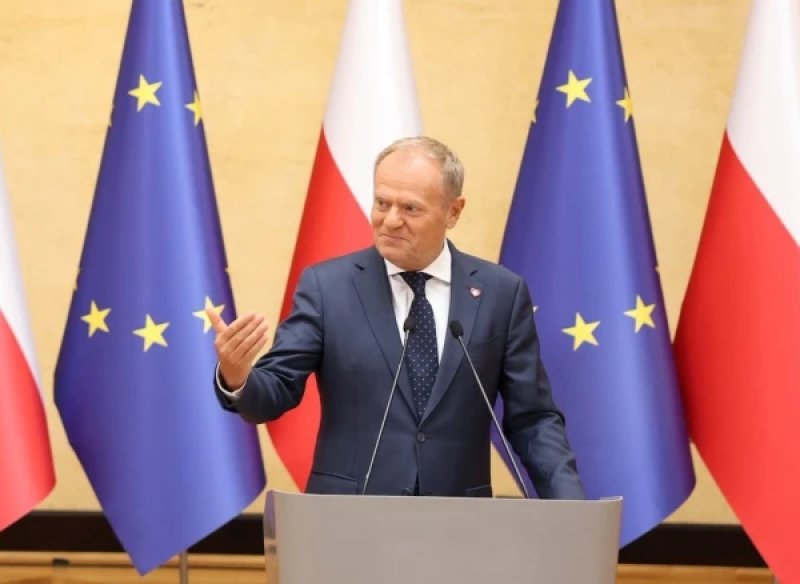
A political discussion has erupted in Poland regarding the country's future participation in the Schengen zone. The occasion was the proposal from the new political force "Development Plus" (R+), led by former Prime Minister Mateusz Morawiecki. Presenting its migration program, the new parliamentary faction proposed to hold a referendum on temporarily suspending Poland's participation in the Schengen zone. According to the authors of the initiative, such a step would enhance the country's security. However, current Prime Minister Donald Tusk categorically rejected this idea. > "There will definitely be no referendum on the Schengen zone... He has gone mad," Tusk stated, commenting on Morawiecki's proposals and those of his new political force. In addition to the referendum idea, the R+ program includes the establishment of a Ministry of Migration and Assimilation, a special deportation service, mandatory assimilation measures for migrants, and measures to encourage Polish emigrants to return home. Tusk also criticized the proposal to create a deportation service. In his opinion, the initiative resembles the American approach to migration policy, which he does not consider a successful example for Poland. In fact, the dispute concerns not only specific proposals but also the future direction of Polish migration policy. Morawiecki's new party is betting on significantly tougher measures, while Tusk's government opposes such initiatives. The Prime Minister also stated that the main problems related to migration arose during the time the Morawiecki cabinet was in power. The political conflict is unfolding against the backdrop of preparations for parliamentary elections, which will take place in Poland in the fall of next year. After disagreements with the leadership of the Law and Justice party (PiS), Morawiecki left its ranks, created his own parliamentary faction, and is now forming a new political party. At the same time, the PiS party proposed to deport Ukrainian men without legal employment from Poland. The Ministry of the Interior of the country labeled such statements as populist.
