

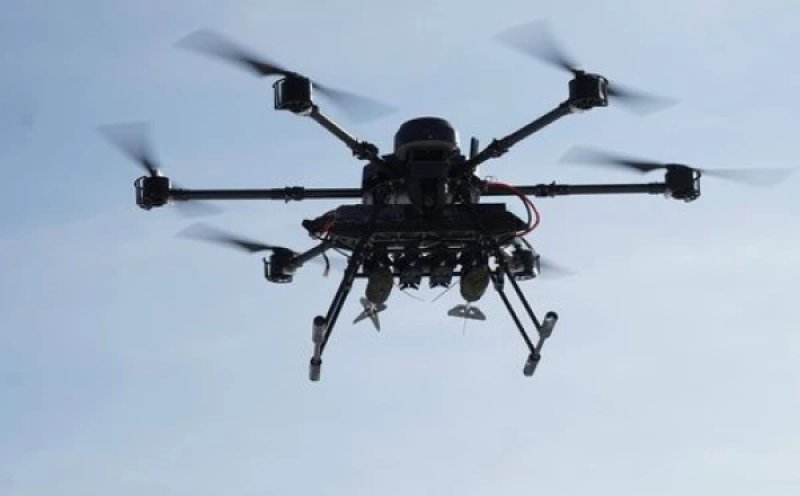
The essence of the approach lies in placing drones near key routes, where they can capture acoustic signals from moving vehicles. After detecting a potential target, the operator receives information about its approach and can decide to strike using the drone itself, artillery, or another drone. Forbes notes that the main advantage of such a system is the lack of need for direct visual visibility of the road. The drone can remain undetected by passing vehicles while still detecting them by sound. According to Senior Sergeant Vitaliy Pyasetsky of the 93rd Separate Mechanized Brigade of the Armed Forces of Ukraine, Russian military forces deploy such drones on high-rise buildings, near public transport stops, and along logistics routes. Once the sound of a vehicle is detected, the information is transmitted to the operator, who determines the next steps. Previously, both sides used FPV drones for ambushes on the roads. However, the acoustic method allows for the detection of vehicles at greater distances and provides more time to prepare for a strike. The tactic is particularly significant due to the role of roads in supplying troops. Even after penetrating the "gray zone," units require regular delivery of ammunition, equipment, and other resources. This is accomplished using vehicles and ground robotic platforms. Additionally, Ukrainian forces employ armored vehicles to clear Russian positions, making transport routes a crucial part of combat operations in the "gray zones." Forbes notes that the new system allows Russian troops to control more routes without the need to constantly have operators directly over each section of the road. This is especially important in areas with complex road networks, where it is impossible to ensure visual monitoring of all directions. According to the publication's estimates, this tactic provides Russia with a relatively inexpensive way to restrict the movement of Ukrainian forces in the "gray zones" using already existing drone technologies.
