

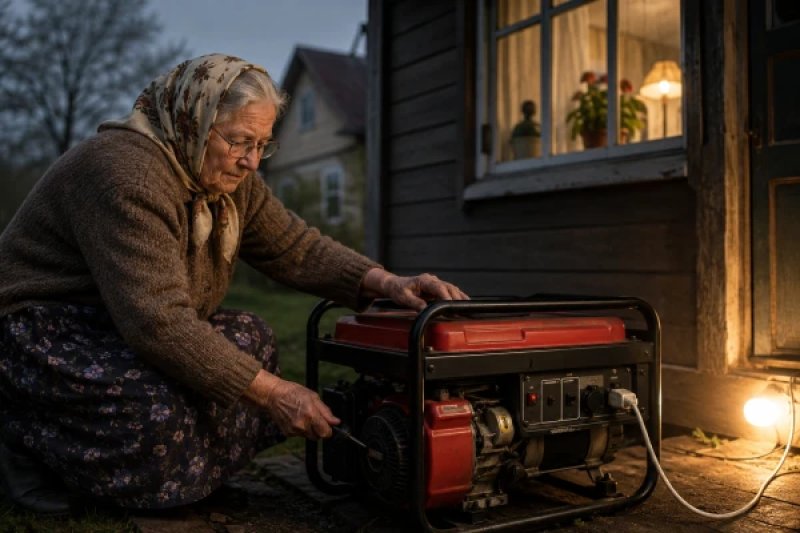
In response to the question of why power outages "stop all life," he said: "It's very simple - individual preparedness of each of us." "It seems that each of us understands that 72 hours is the absolute minimum when we must be able to survive, that households should have generators, but have we done this, have we equipped ourselves with essentials to last at least 72 hours without outside help?" Zile asks. About 37 hours have passed since the power outages began. "We must be ready to live without electricity for even longer, but no - we are used to comfort, and as soon as there are the slightest losses of comfort, it causes us difficulties in continuing our usual daily rhythm," Zile said. According to him, in the first moments after the power outage, drinking water was instantly sold out in some stores, although residents were timely warned about the storm. People had the opportunity to fill containers with water at home. "But for some reason, we never take this personally," he said. In response to a remark that there was a lack of communication and the ability to receive information during and after the storm, Zile replied that the concept of 72 hours includes both communication and the ability to receive information, and every household should have a battery-operated radio. When asked to comment on how local governments informed people, Zile said that local authorities are very actively involved in addressing the aftermath. When asked about the responsibility of entrepreneurs, such as gas stations and mobile operators, Zile replied that fuel supply should be autonomous and continuous for at least 72 hours after the power outage. He promised that this issue would be addressed.
