

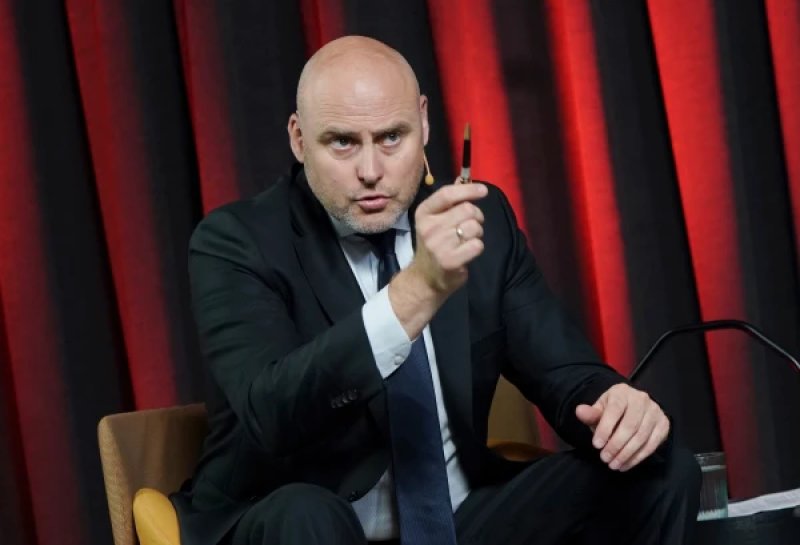
The storm at the end of last week showed that all services in the country are not coordinated with each other, said Prime Minister Andris Kulbergs in a video on Twitter. The Prime Minister is currently on an official visit to Ukraine. While there, he commented on the situation in Latvia. In his opinion, Latvia has not learned enough from the war in Ukraine. According to Kulbergs, in winter, a storm of such magnitude would have had even worse consequences because there would be no water, electricity, or heating. "What could be observed from the state's perspective is that the services are not coordinated with each other. I mean - all services," said Kulbergs. He stated that yesterday he was at the military crisis management center in Ukraine, where he observed how not only military operations are coordinated. In this center, there was one screen through which people from the fire service, police, and other agencies were coordinated in the same way. "We need to adopt Ukraine's experience," the Prime Minister said. Kulbergs promised that if necessary, funds from the budget for unforeseen expenses would be allocated to strengthen the services. He also expressed the opinion that entrepreneurs should be prepared for such crises - there cannot be a situation where, for example, a manufacturer loses goods due to a lack of electricity because they did not provide themselves with a generator to continue the business operations. If necessary, the government is ready to introduce the required regulations, Kulbergs added. The Prime Minister also criticized Latvian Radio, which during the storm urged people to seek current information online. He said that a third of Latvia is covered by an alternative communication system. By investing a small amount, it could cover all of Latvia so that communication is not interrupted during a crisis. The main conclusion after the storm, according to the Prime Minister, is that Latvia needs more than just many separate services and action plans - they must work as a unified system. Kulbergs promises to use Ukraine's experience, strengthen crisis communication, and allocate additional state funds for improving the readiness of the services if necessary.
