

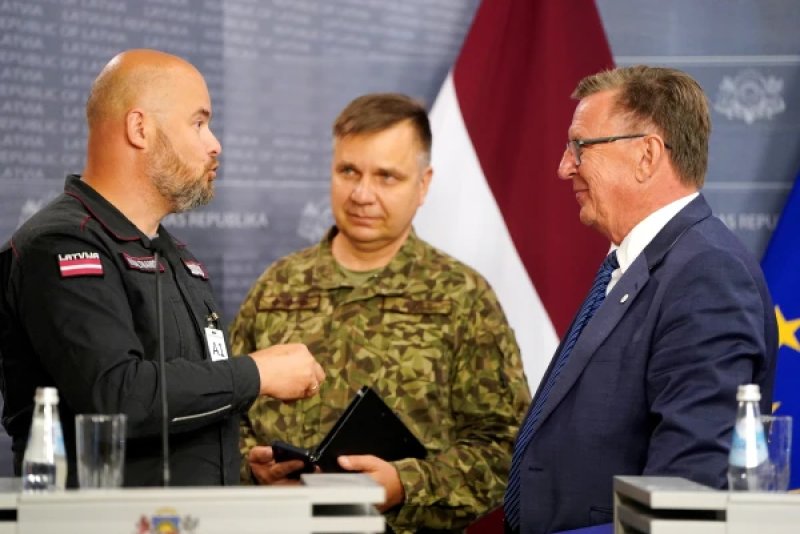
Latvia's readiness for the crisis situation that arose as a result of the storm last weekend can be rated at six points on a ten-point scale. Within three weeks, all parties involved must prepare proposals to address the identified shortcomings, said Finance Minister and Acting Prime Minister Maris Kucinskis (AS) after the government meeting on crisis management. According to him, today's meeting was convened so that the consequences of the storm would not simply be forgotten as a past event. The closed part of the meeting discussed power outages during the storm. Kucinskis acknowledged that Latvia can never be fully protected from situations where electricity is lost due to extraordinary circumstances. Issues related to communication and other matters concerning the aftermath of the storm were also discussed. All ministries, involved institutions, and the Crisis Management Center have been tasked with submitting recommendations and proposals to the government on how to improve the overall system in similar crisis situations by **September 15**. Kucinskis rated the system's performance during the storm as a 'six', as, according to him, there were things that 'worked and worked well'. He also compared the current situation to the storm of January 2005, when he was in government. In Kucinskis' assessment, Latvia has made significant progress since then in coordinating processes and organizing work during emergencies. At the same time, there remain many areas that need improvement. That is why all responsible structures have been instructed to present their proposals by September 15 on what specific changes should be made. As reported, on Saturday, August 22, and the following night, Latvia was hit by the strongest summer storm in decades. In some places, wind speeds exceeded 30 meters per second. The storm caused extensive damage to distribution and transmission power networks. Initially, power supply was disrupted for approximately 277,000 customers across Latvia. However, the problems were not limited to the lack of electricity. Following the damage to power networks, communication ceased to function in many areas, gas stations became inaccessible, and there were issues with the operation of stores in some places. The recent storm effectively served as a large-scale test of Latvia's readiness for emergencies. The government acknowledges that the system operates significantly better than two decades ago, but the rating of 'six out of ten' indicates that there are still many issues, primarily in ensuring electricity, communication, and coordination of actions during a large-scale crisis.
