

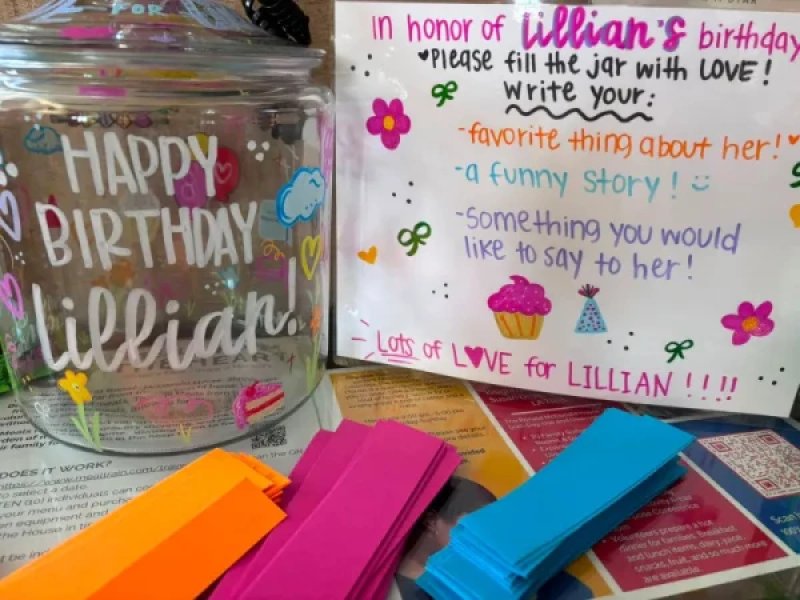
Eight-year-old Lillian Smart from Louisiana died on Saturday at Ruston hospital from a severe infection, presumably caused by Naegleria fowleri — a rare amoeba often referred to as the 'brain-eating amoeba,' reports the New York Post. According to the family, the girl's condition was extremely serious. Lillian spent time in the intensive care unit, but doctors were unable to save her. She died just one day after celebrating her eighth birthday.  _Facebook._ > "The brain damage was too severe for her little body to recover," the girl's relatives said in a statement posted on social media.  _Facebook._ The Louisiana Department of Health reported a case of Naegleria fowleri infection in the state on Wednesday. The agency did not disclose the patient's name, but Lillian's family stated that this infection was the cause of her illness. According to the department, the infection likely occurred while swimming in Lake Claiborne shortly before the first symptoms appeared. However, health officials have not publicly confirmed that this refers specifically to Lillian Smart. Naegleria fowleri is a microscopic amoeba that can cause primary amoebic meningoencephalitis (PAM), an extremely rare and often fatal brain infection. The infection occurs when contaminated water enters the nose, allowing the microorganism to reach the brain. The infection is not transmitted through swallowing water. The amoeba also does not live in seawater and should not be present in pools with properly maintained chlorine levels. Initial symptoms typically appear about five days after infection. They can include headache, fever, nausea, and vomiting. As the disease progresses, symptoms may include neck stiffness, seizures, loss of consciousness, and coma. According to the CDC, about 97% of patients with primary amoebic meningoencephalitis die. Over the past approximately 90 years, there have been 173 reported cases of infection in the United States, with nearly 91% occurring in July and August. Last year, two cases of PAM were reported nationwide. This is not the first such case for Louisiana. According to the state health department, there have been three deaths associated with Naegleria fowleri since 2011. Two fatalities occurred in 2011. In one case, a 20-year-old man from St. Bernard Parish used tap water to rinse his sinuses, and a 51-year-old woman from DeSoto Parish did the same. In 2013, a four-year-old boy died from the infection after playing on a water slide in the yard of a home in St. Bernard Parish. Subsequent testing by the CDC found Naegleria fowleri in the water supply system of that parish. The case of Lillian Smart brings renewed attention to the extremely rare but almost always severe infection associated with Naegleria fowleri. Although the likelihood of infection is low, experts recommend exercising caution when swimming in warm freshwater during the hot summer months, especially avoiding water entering the nose. However, there is currently no official confirmation that the deceased girl was indeed the patient previously reported by the Louisiana Department of Health.
