

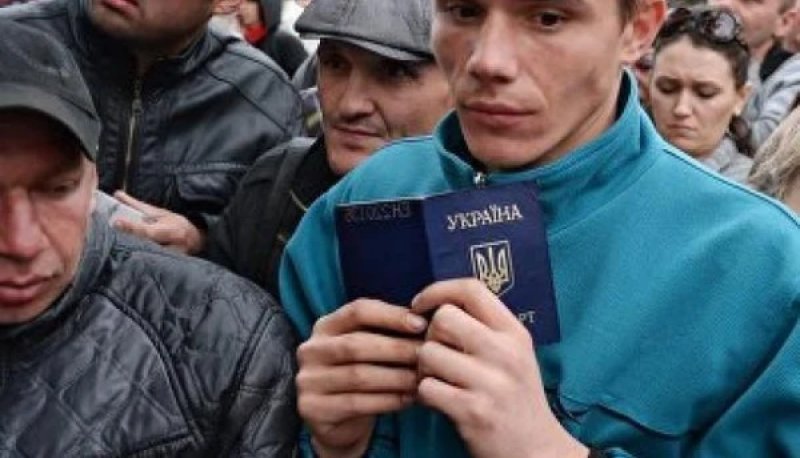
At the beginning of Russia's full-scale invasion of Ukraine, Kyiv and Warsaw had a chance to achieve an unprecedented alliance in their shared history. At that time, Poland actively supported Ukraine on the international stage, and Kyiv praised Warsaw for its generosity. This is noted by Polish political journalist Mateusz Mazzini in a column for The Guardian. The author recalled how, at the start of the large-scale war, Poles rushed to help millions of Ukrainians seeking refuge. Even the ruling populist party, Law and Justice, was forced to follow this example. However, this did not last long, Mazzini stated, referring to the results of a CBOS survey, which showed that 52% of Poles are currently against accepting Ukrainian refugees. And the number of people “tired” of supporting Ukraine in Poland is growing. According to the author, the conflict between the countries escalated when Ukrainian President Volodymyr Zelensky named one of the military units after the UPA. And Polish President Karol Nawrocki stripped Zelensky of the Order of the White Eagle. Both countries returned awards and froze relations. The author noted that this played into the hands of Russian propaganda, which is actively working in Polish social networks. It not only amplifies disinformation but also fuels tensions that increasingly escalate into violence. In Mazzini's opinion, personal disagreements between the presidents, historical parallels, or Russian influence are just part of the reasons why Poland and Ukraine are losing cooperation. "Poland has failed to fully realize that Ukrainians were not just helpless victims of Vladimir Putin, but real people with their own will. Many Ukrainian refugees, as soon as they had the opportunity, left the living rooms of their Polish hosts and rented or bought their own apartments. They established thriving businesses and created a strong community, often entering into direct competition with the local population. They refused to behave as grateful or passive recipients of Polish charity," Mazzini noted. He adds that this is a positive development for Poland. However, for a country that has long been completely ethnically homogeneous, such a change is complex. "Ukraine has transformed from a passive recipient of Western aid into a global exporter of new military technologies and know-how. Accustomed to direct negotiations with leaders in the U.S. and Western Europe, Ukrainians do not need a 'lawyer', especially not in Warsaw... Thus, instead of cooperation, contempt arises, and instead of hope – hatred," Mazzini added. All of this, in his opinion, creates tension between two governments that were not prepared for it. This has allowed Russian propaganda to fill the vacuum, intensifying tensions between Ukraine and Poland. The author wrote that Ukraine will draw even closer to Europe in the coming years. This will create competition in the economic sector not only for Poland but also for France and Germany. Against this backdrop, Ukrainian leaders will come to Brussels, Paris, or Berlin and will not be asking for weapons and money. Instead, they will demand an equal voice, as protecting the continent from the Russian threat has secured them a seat at the negotiating table. "None of this should be surprising: Ukrainians are more than just victims, and Ukraine is more than a country at war. Poland's inability to take this into account has already had dramatic consequences. The rest of Europe still has time to prepare for this obvious reality," Mazzini notes.
