

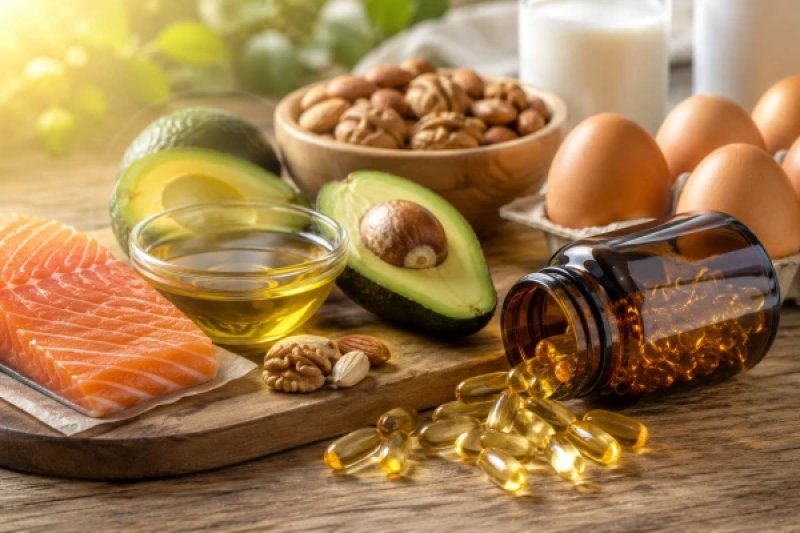
The main feature of vitamin D is that it is a fat-soluble vitamin. Therefore, its absorption is improved when the supplement is taken with food that contains fats. Foods such as eggs, avocados, nuts and seeds, fatty dairy products, and other sources of dietary fats are suitable for this purpose. Taking vitamin D on an empty stomach may be less effective. ### In the Morning or in the Evening? There is no definitive rule regarding the time of day. It is much more important to take vitamin D regularly and with food. Some people find it more convenient to include the supplement in their morning or daytime meals. The question of the effect of evening vitamin D intake on melatonin production and sleep quality has not yet been definitively resolved: there is insufficient compelling evidence that everyone needs to avoid it in the evening. ### What to Be Cautious About The phrase "what vitamin D should categorically not be taken with" sounds too absolute. For most people, there is no long list of common foods or vitamins that are prohibited from being combined with vitamin D. However, some medications can affect its absorption or metabolism in the body. Therefore, individuals who regularly take medications, especially those affecting calcium metabolism, kidney function, or fat absorption, should discuss vitamin D intake with a doctor or pharmacist. ### More Does Not Mean Better Vitamin D can accumulate in the body, so increasing the dosage uncontrollably is not advisable. Excessive intake over a long period can lead to elevated calcium levels in the blood. Possible signs of excess include nausea, weakness, extreme thirst, and frequent urination. In severe cases, kidney stones and damage to internal organs may occur. For adults, the upper acceptable level of intake is usually **4000 international units per day**, but this does not mean that this dosage is necessary for everyone. In cases of established deficiency, a doctor may prescribe a higher dosage for a certain period. To ensure that vitamin D does not turn into "money down the drain," it is important not only to take the capsules or drops themselves. It is wiser to take it with food containing fats, not to exceed the dosage without medical indications, and to discuss the need for a blood test and an appropriate intake regimen with a doctor if a deficiency is suspected.
