

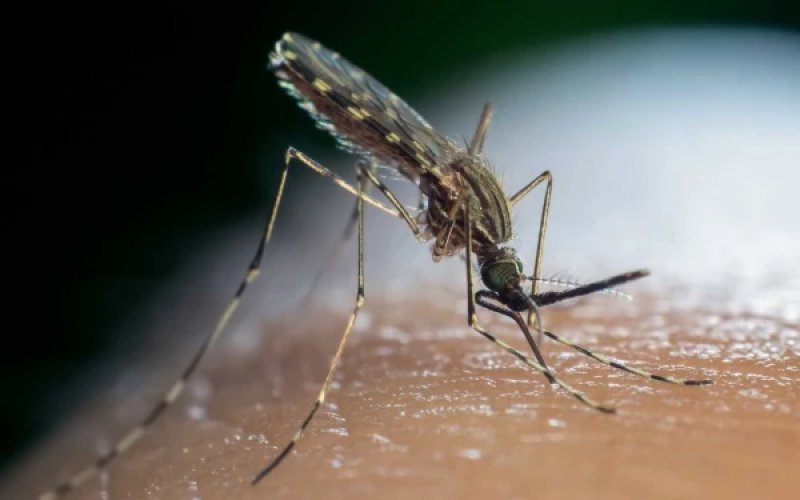
Two employees of Frankfurt Airport have died from malaria, confirmed Fraport, the company that manages Germany's largest airport. A total of six workers were found to be infected. The other four sick employees have recovered. The main theory is that the source of infection was an Anopheles mosquito, which may have arrived in Frankfurt on a plane from a malaria-endemic region. After the cases were identified, Fraport recommended that employees seek medical attention at their workplace if they experience any suspicious symptoms. This measure is intended to help diagnose the condition more quickly, as doctors may initially not suspect this infection in a person who has not traveled to malaria-endemic countries. Malaria can be accompanied by high fever, chills, headache, and nausea. With timely treatment, the chances of complete recovery are generally high. ### What is 'Airport Malaria' So-called airport malaria occurs when a mosquito infected with the malaria parasite survives a flight and then bites a person at or near the airport. Such cases are extremely rare. One of the main problems is that diagnosis can be delayed: the sick person has not traveled to malaria-endemic regions, so neither they nor the doctors may initially associate the symptoms with this infection. According to the Robert Koch Institute, several Frankfurt Airport employees fell ill between July 4 and July 6. ### Mosquito Traps Installed at the Airport After the incident, special traps were installed at the airport to determine whether there are other potential carriers of the malaria parasite. The captured mosquitoes are planned to be studied at the Institute of Tropical Medicine in Antwerp. Specialists will determine their species and possible origin. Thus, health authorities hope to identify the source of infection and ascertain whether there is a risk of new cases emerging. Cases of 'airport malaria' are particularly challenging to diagnose precisely because the infected individuals may never have been to countries where the infection is prevalent. Therefore, rapid identification of the disease and timely treatment are crucial in such outbreaks.
