

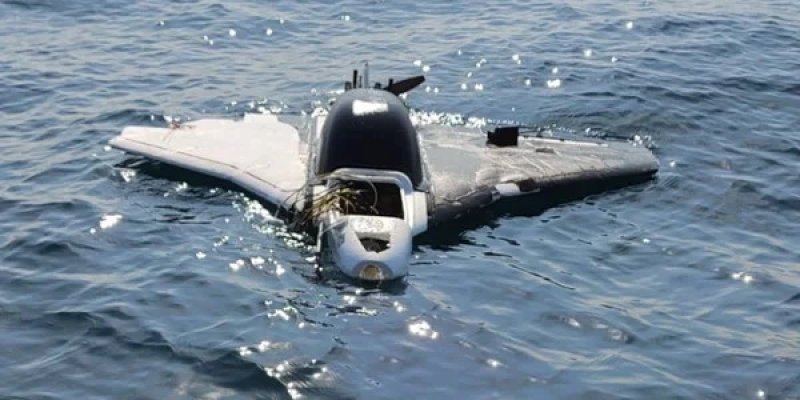
Countries in the Baltic Sea region have decided to unite efforts for a quicker response to hybrid threats. A new working group will focus on operational information exchange and joint risk assessment — from cyberattacks and drones to sabotage against critical infrastructure. On August 28, Latvia's State Secretary of the Ministry of the Interior, Dmitrij Trofimov, participated in a meeting on hybrid security in Flensburg, Germany. According to the ministry, the interior ministers of the Baltic Sea region countries agreed to create a new security working group for operational coordination. The meeting took place at the naval forces training center in Mürwik. Participants discussed the most pressing security policy issues relevant to the common future of the Baltic Sea region. The discussion centered on hybrid attacks carried out by foreign states, aimed at creating security threats in the region, destabilizing democracy, and weakening the economies of the countries. As stated at the meeting by German Interior Minister Alexander Dobrindt, there has been a sharp increase in incidents related to drones and cyberattacks, espionage, disinformation, covert operations, and deliberate arson of critical infrastructure objects. Additionally, so-called "one-time agents" are being used more frequently. Participants agreed that recent events clearly indicate a rise in both the intensity and quality of such attacks. Therefore, the countries in the region must be prepared for further escalation of the situation regarding hybrid threats. The common goal of the countries is to significantly accelerate the investigation of such incidents, implement a policy of deterrence, and defend more effectively against hybrid threats. Thus, the Baltic Sea region is expected to be transformed from a **"zone of collective risk" to a "zone of collective protection"**. As a result of the meeting, the parties agreed to establish a rapid response working group in the field of hybrid security. It will include state secretaries from the interior ministries of the Baltic Sea countries. The task of the new group will be to ensure operational communication channels between states and to jointly develop an assessment of hybrid threats. Participants also concluded that when planning the multiannual budget of the European Union for 2028–2034, priority attention should be given to technologies for protecting against drones and strengthening regional operational cooperation. The meeting was attended by representatives from Latvia, Germany, Denmark, Estonia, Finland, Lithuania, Poland, Sweden, and Norway, as well as Ireland, which currently holds the presidency of the Council of the European Union. The establishment of the rapid response group should allow the Baltic Sea countries to exchange information more quickly and coordinate actions in the event of hybrid incidents. Special attention is planned to be given to threats related to drones, cyberattacks, and critical infrastructure.
