

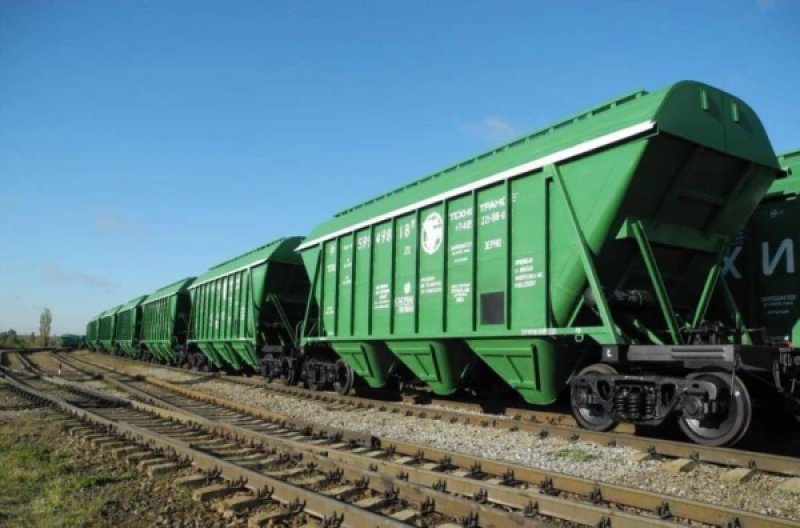
The meeting will be held in a closed format. The only item on the agenda will be possible decisions regarding grain transit. The speaker is Minister of Transport Rihards Kozlovskis (JV). It was previously reported that Kulbergs instructed to check the origin of transit grain passing through Latvian ports. As Shverna explained earlier, after negotiations with Ukrainian President Volodymyr Zelensky and Prime Minister Serhiy Korotky, the head of the Latvian government received information from the Ukrainian side about significant volumes of grain stolen in the occupied territories of Ukraine. There is a risk that some of this grain, with documents of Russian origin, may be transported through Latvian ports. "This is very serious information that Latvia cannot ignore. If senior officials in Ukraine point to such a risk and at the same time we observe an atypical increase in demand for the transit of Russian grain, it is our duty to act immediately. We cannot allow our railways and ports to serve as a backup corridor for the Russian military economy," said Kulbergs. It was also reported that Russian grain exporters have begun redirecting supplies from the Black and Azov Seas to the Baltic Sea amid Ukrainian attacks on vessels and port infrastructure. In the last export season — from July 2025 to June 2026 — Russia exported 46.3 million tons of grain through the ports of the Black and Azov Seas, or 90% of its total grain export volume. Only about one million tons were shipped through Russian ports in the Baltic Sea. However, according to sources from Reuters, since the beginning of the new season until mid-August 2026, the volume of requests for grain transportation to Russian ports in the Baltic Sea has already reached five million tons. This is almost comparable to the figures for Novorossiysk and Tuapse — six million tons. In addition, Russian exporters are increasingly showing interest in the ports of the Baltic States, primarily Latvia. It is expected that in September the volume of such shipments will sharply increase. Due to attacks by the Armed Forces of Ukraine, more than 80% of Russia's grain export capacity has been destroyed. According to experts, wheat exports in August amounted to only 1.9 million tons — the lowest figure in the last 16 years.
