

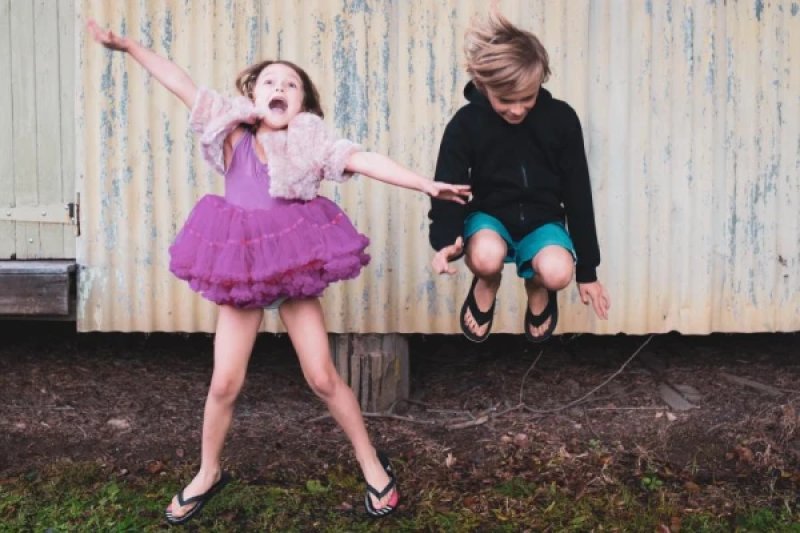
At this age, the child's body changes in size and proportions, and they no longer look like a chubby infant. Both gross and fine motor skills develop intensively, and physical activity reaches its peak. The rapid development of the brain leads to an expansion of the child's intellectual capabilities. There is a transition from concrete operational thinking to imaginative thinking, speech is enriched, and memory and imagination develop. In a short period, the child's personality undergoes significant changes. These changes affect their character, main activities, and relationships with others — adults and peers. It is at three years old that the foundations of their self-image are formed and their attitude towards the surrounding world is defined. Due to such a global "restructuring" of the inner world, the child may become capricious and difficult. Physiology Compared to younger ages, there are no significant changes in diet and daily routine (unless you enroll the child in kindergarten). There is a prolonged night sleep, one daytime nap, and four meals a day. On their third birthday, the child can be introduced to sweets. Do not forget about regular medical check-ups: from this point on, they can be done once a year, but no less frequently. Skills and Abilities A child of this age is characterized by a high need for movement. Three-year-olds constantly improve their motor skills. The development of gross motor skills comes to the forefront — the ability to perform movements that require the involvement of the whole body (running, jumping, squatting, turning). A three-year-old child: ♦ Moves smoothly and skillfully, maintaining good balance. ♦ Easily changes direction while moving and stops in motion. ♦ Can walk on tiptoes, stand on one leg. ♦ Jumps confidently, including over small obstacles. ♦ Catches and kicks a ball. ♦ Climbs up and down stairs, holding onto the railing and even without support. ♦ Rides a tricycle. During this period, fine motor skills are also being perfected, although the child still experiences difficulties in performing particularly precise movements. Nevertheless, a three-year-old child is capable of: ♦ Putting on and taking off simple clothing, unbuttoning buttons, and managing large zippers, taking off Velcro shoes. ♦ Using cutlery correctly, eating and drinking neatly. ♦ Holding a pencil with their index and thumb, making balls and rolls from plasticine, cutting paper with scissors. ♦ Drawing a circle, horizontal and vertical lines, and beginning to draw stick figures. Thus, the child becomes increasingly independent in performing everyday actions. How Speech Develops By the age of three, the child's speech activity significantly increases. The child's vocabulary consists of approximately 1000-1500 words, they use almost all parts of speech, speak in sentences of 3-6 words, and generally grasp the grammatical structure of the language. As a rule, the child can already engage in dialogue: they willingly answer questions from those around them, ask their own, and their speech includes polite words and exclamatory intonations. At this age, they can verbally describe their feelings, talk about their impressions, and share their experiences. The child's social circle noticeably expands by the end of the third year of life: they talk a lot with both familiar adults and strangers, as well as with peers. The child's speech often accompanies their independent activities; they comment on their actions with objects ("I threw the ball") and address their toys ("Eat, doll"). A three-year-old enjoys listening to audio recordings, fairy tales, and poems read by an adult, easily memorizing them and reproducing them almost verbatim. Additionally, they actively "play" with language, experimenting with rhymes and inventing non-existent words. If a child is already three years old but does not speak in phrases or is completely silent, a consultation with specialists — a speech therapist, neurologist, or psychologist — is necessary. Psychological Features At the age of three, the child's desire for separation from adults sharply increases. The child increasingly says: "I can do it myself," "I want," "I won't," demonstrating their independence from caregivers. This period is referred to as the "three-year crisis." The child may act against any suggestions from adults, be stubborn, and throw tantrums "for no reason." They strive to do everything the opposite way, resist the will of adults, and reject what they used to do. At the same time, they attempt to perform actions independently that they are not yet ready for. Not all children exhibit the crisis in acute negative forms. Some react less violently or for a very short time. However, relationships with close adults and with themselves undergo changes in any case, and the formation of the child's own "self" takes place. As the child emerges from the crisis, they begin to oppose adults less. They develop another way of self-assertion: they strive to achieve results in activities and, upon achieving their goals, try to demonstrate their successes to adults and gain their approval. The child does not just stack a block on top of another — it is important for them to build the tallest tower possible and hear praise from the parent: "What a tall tower! You did great!" Now they see themselves through the eyes of adults and become sensitive to how others evaluate their achievements. Advice for Parents of Three-Year-Olds The "three-year crisis" is a trial for the whole family. It is important to go through it "correctly," as the nature of the child-parent relationship during this period will affect the child's future. There is no single recipe for how to respond to a three-year-old's tantrums. The main thing is to convey that conflicts can be resolved in different ways. Some things a parent must categorically prohibit, and the child will have to accept this. For example, running away from mom near a roadway is dangerous for life. The child may protest against the restriction of their freedom; however, in matters of health and safety, the adult's reaction must be unequivocal. If it concerns less serious disagreements, various behavioral tactics can be used. Sometimes it is necessary to distract the child — with conversations or play, or to set up a competition. For example, suggest to the stubborn three-year-old to play "who can put on their jacket faster." In a playful manner, you can race to pick up toys or brush teeth together with a doll. Sometimes it is also possible to yield to the child, as they have the right to their own opinion and personal preferences. Don’t want to eat semolina porridge? Offer buckwheat or rice instead. Refusing to go to bed? Read a book for another fifteen minutes. This is not indulging whims, but showing respect for the child's wishes and needs. In some situations, the child needs to be given the opportunity to express their emotions, release tension, and accept the situation as it is. If you have decided not to buy your son a tenth toy car and he throws a tantrum in the store, it is better to wait out the storm. Demands to "shut up" and "calm down right now" can lead to the opposite effect. It is necessary to just be nearby, hug them, wipe their tears. You can even say nothing; tactile contact and attention are more important. When the child calms down, it is important to explain how to behave, clarify why you acted as you did. Educational conversations will be effective only in an atmosphere of calmness and trust. It is important! At the age of three, the child realizes that their desires do not always coincide with the desires of those around them. If every conflict situation is not extinguished with shouting and slapping, the child learns various behavioral strategies and learns to take into account the will of other people. The three-year crisis will end sooner or later, but what the child learns as a result will stay with them for many years.
