

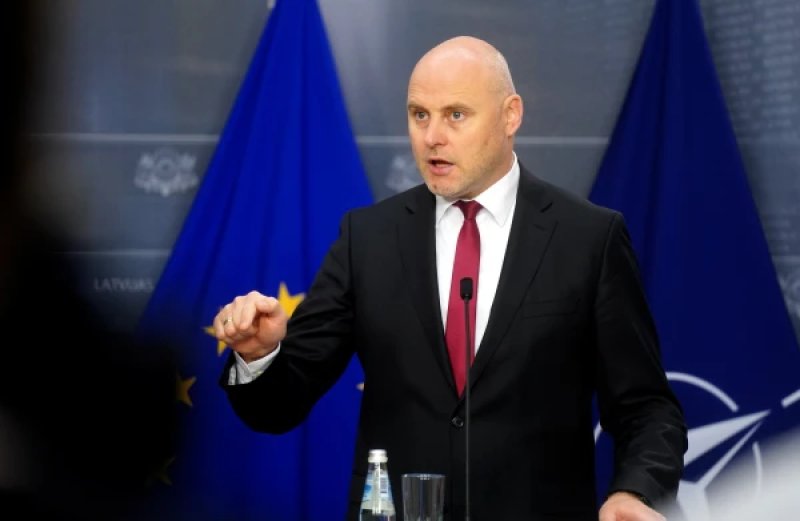
As is known, airBaltic has decided to issue another batch of bonds, that is, to take another loan - this time at 25 percent! The Union of Greens and Farmers demanded that the Prime Minister explain why a loan was taken at such fantastical interest rates and whether the airline would thereby lose the opportunity to attract a strategic investor. Today, Andris Kulbergs took to social media with a detailed explanation of the situation and his position: "To make it clear to everyone. The choice is between saving airBaltic or continuing to be a bad owner without money. I, as Prime Minister, do not want the state to continue being a bad owner. We trust professionals, the management, the board, and Kozlovski. This plan was brought to the government, we approved it, and it was enshrined in the law that provides for it. I have been saying for a month that the decisions are in the hands of the bondholders. The state is not investing money in this loan for the airline. The loan is private short-term financing (bondholders with collateral and a private fund without collateral) that gives Minister of Transport Kozlovski (JV), the management, and the board of airBaltic 180 days to finally put the enterprise in order and attract a strategic investor. The new loan is expensive, as it reflects the real financial situation of airBaltic. This is the last chance to save the company. In 2024, under the Silin government, airBaltic borrowed 380 million euros in very expensive bonds. This money was supposed to serve to bring the enterprise in order at that time. But over two years, the money was burned - costs were not reduced, the number of aircraft/routes was not revised, and finances and debts were not put in order. The result is logical: the next money is even more expensive, as creditors see the current risk of the company. The interest rate on the new private loan is lower than on the state loan of 30 million euros, approved by the Silin government and Progressives in APRIL (without a plan, without a rescue strategy). Why is it lower? Because this government reduces the role of the government. It effectively removes the risk of inadequate actions by the state as an owner. Immediately, the market is ready to allocate funds for restructuring. My position on airBaltic has been clear for a long time: 1. The future of airBaltic is now largely in the hands of bondholders, not shareholders. 2. The state, as the owner, and the management of airBaltic could have put the enterprise in order when there was still money for that. Weak cooperation between the management and the political leadership of the company also led to the fact that the then IPO plan was not realized. 3. This created a situation where the enterprise has a weak financial position, and the owner - the state - has no free money to save the enterprise. 4. If the state as the owner has neither the means nor sufficient experience and knowledge to pull the enterprise out of a difficult financial situation, then the state cannot save the enterprise alone. (SZK and Viktors Valainis understand and know well that Lufthansa refused and does not want to finance AB) 5. Therefore, the management and board of airBaltic, together with Seabury, developed a plan to stabilize the financial situation of the enterprise with the help of private financial investors - essentially without state money. 6. For this plan to be implemented, the state must allow professionals to work and not create additional obstacles. This is the plan submitted by Minister of Transport Kozlovski to the government, which the government approved and for the implementation of which the necessary legal regulation has also been adopted. 7. Financial investors evidently believe that within six months the finances of the enterprise can be organized sufficiently for airBaltic to continue its development and attract a strategic investor. 8. Now Minister of Transport Kozlovski and the board of airBaltic, representing the interests of the state, must do everything possible within these 180 days to attract such a strategic investor for whom Riga is important as a main base. Latvia needs an investor who sees the long-term development of airBaltic precisely in Latvia with a main base and jobs. Ideally, this would be a partner alongside whom the Latvian state could retain or acquire a stake in the enterprise in the future. 9. This is a direct responsibility of the Ministry of Transport, Minister Kozlovski, and the board of airBaltic. I will demand regular reports on approached potential investors and the progress of negotiations. I am not satisfied with the current pace of communication with investors. We need to get ourselves together. These 180 days cannot simply be squandered.
