

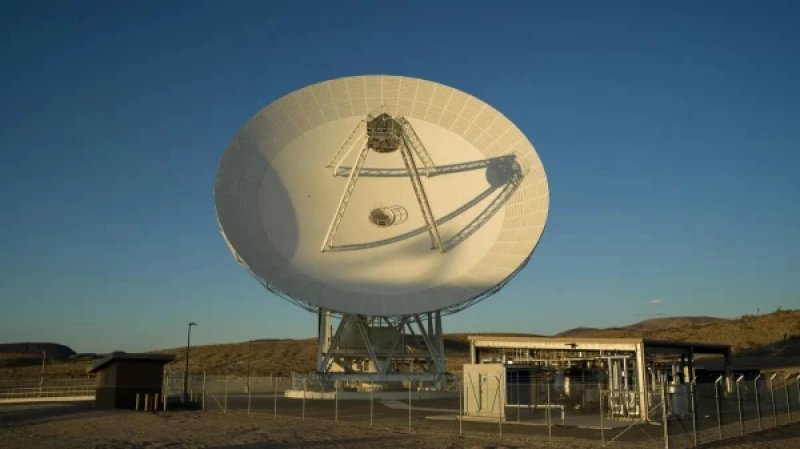
NASA continues to modernize its Deep Space Network (DSN), which is essential for managing dozens of spacecraft operating far beyond Earth. A new 34-meter radio frequency antenna has begun operations at the Goldstone complex in the California desert, writes [Space](https://www.space.com/astronomy/nasa-expands-deep-space-network-with-giant-new-dish-in-california-desert). Today, the DSN provides communication with more than 40 spacecraft exploring the Solar System and interstellar space. Among them are Voyager 1, Voyager 2, New Horizons, and other NASA scientific missions. However, in recent years, the load on the network has significantly increased. During the Artemis I and Artemis II missions, priority was given to maintaining communication with lunar spacecraft, temporarily reducing the capacity to service other spacecraft. Brad Arnold, the Deep Space Network manager at NASA's Jet Propulsion Laboratory, acknowledged that the agency is no longer able to expand its infrastructure at the same pace as demand is growing. "We are trying to increase capacity and install more antennas, but we are not keeping up with current demand, so missions should expect less availability of resources," he noted. According to Arnold, the further development of the Artemis program will further increase the load on the network, as crewed expeditions will always take precedence over automated spacecraft. ## Why DSN is So Important The Deep Space Network is one of NASA's key infrastructures. Established in 1963, it has since provided communication for nearly all American missions in deep space. It was through the DSN that data was transmitted during the historic Apollo 11 crew landing on the Moon in 1969. Later, the network supported the operations of rovers, received information from the Voyager spacecraft that confirmed their exit into interstellar space, and today supports numerous international space projects. An additional burden is created by the fact that NASA's infrastructure is used not only by American but also by foreign space agencies. ## Preparing for a Permanent Presence on the Moon The development of the DSN is linked not only to current missions. In the 2030s, NASA plans to establish a permanent infrastructure in the vicinity of the Moon's south pole. A separate communication network is planned to be deployed for it, which will ensure interaction between all elements of the future lunar base. Today, the Deep Space Network includes three complexes — in Goldstone (USA), Madrid (Spain), and Canberra (Australia). Each has a 70-meter antenna and several more compact complexes. The new DSS-23 antenna, which was put into operation on August 3, became the fifth of six 34-meter antennas being constructed as part of the Aperture Enhancement Project. The first mission it supported was the Chandra X-ray Observatory. ## The Project Became More Expensive and Took Longer The modernization of the DSN has been ongoing since 2009; however, the implementation timelines have significantly increased. If the initial cost of the project was estimated at $362.4 million, by the beginning of the 2023 fiscal year, the expected expenses had risen to approximately $706 million. At the same time, the program has fallen behind the original schedule by nearly five years. NASA now expects to complete the installation of all six new antennas by 2029, when the last DSS-33 station in Canberra will become operational. As the number of space missions grows, the development of the communication network becomes one of NASA's key tasks, without which neither new explorations of deep space nor long-term expeditions to the Moon are possible.
