

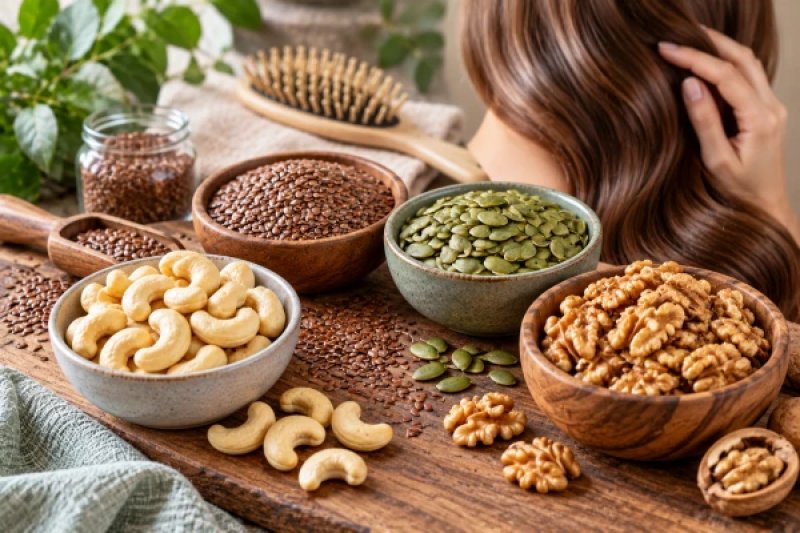
However, it is important to understand that no single product can stop pathological hair loss on its own. Nutritional correction can be particularly noticeable in cases where the problems are indeed related to a deficiency of certain nutrients, as reported by [Verywellhealth](https://www.verywellhealth.com/nuts-and-seeds-that-can-support-hair-growth-12032588). ### 1. Cashews Cashews contain iron, copper, zinc, and protein — substances necessary for the normal functioning of hair follicles. Zinc is involved in cell division and tissue repair processes, iron is essential for oxygen transport, and copper is involved in several processes related to the formation of connective tissue and hair pigmentation. Adding cashews to your diet is easy — a small handful can be used as a snack or added to cereals and salads. ### 2. Flaxseeds Flaxseed is a source of alpha-linolenic acid, which belongs to plant-based omega-3 fatty acids. It also contains protein, fiber, lignans, iron, and other micronutrients. This set of nutrients helps maintain the normal condition of skin and hair. However, it would be an exaggeration to claim that flaxseeds directly make hair grow faster. For consumption, it is better to grind flaxseeds — this makes it easier for the body to absorb the nutrients they contain. They can be added to yogurt, cereals, or smoothies. ### 3. Pumpkin Seeds Pumpkin seeds are rich in zinc, magnesium, and iron. Researchers are particularly interested in pumpkin seed oil. There are studies linking its consumption to improved hair growth in people with androgenetic alopecia. One possible explanation is its effect on mechanisms related to dihydrotestosterone (DHT), a hormone that plays an important role in the development of this type of baldness. However, there is currently insufficient evidence to consider pumpkin seeds or their oil a complete treatment for hair loss. ### 4. Walnuts Walnuts contain plant-based omega-3 fatty acids, protein, vitamin E, copper, zinc, and iron. These substances are necessary for many processes in the body, including those related to skin and hair health. A balanced diet becomes especially beneficial when there is a deficiency of certain micronutrients. There is no need to consume large amounts of nuts. They are quite calorie-dense, so a small portion is sufficient as part of a varied diet. ### More Does Not Mean Better In an attempt to stop hair loss, some people start taking large doses of vitamins and minerals on their own. This can have the opposite effect. An excess of certain substances, particularly vitamin A and selenium, can actually contribute to hair loss. Excessive iron intake is also dangerous to health. Therefore, in cases of noticeable or prolonged hair loss, it is better to first determine the cause of the problem and, if necessary, check levels of iron, vitamin D, and other indicators as recommended by a doctor. The main conclusion from specialists: cashews, flaxseeds, pumpkin seeds, and walnuts can be a beneficial part of the diet for hair health, but they are nutrition, not a cure for baldness.
