

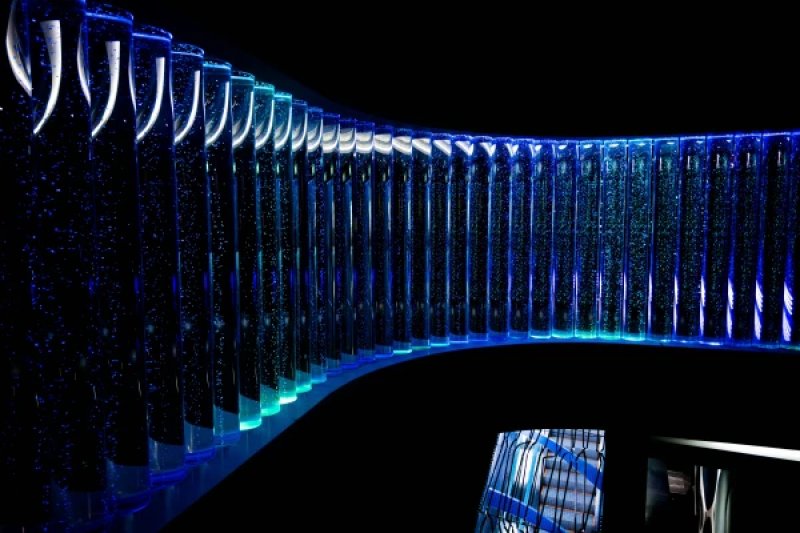
As tech companies build more data centers to develop artificial intelligence, protests from local residents are intensifying in the U.S. In Texas, Arizona, and New Mexico, people are demanding limits on the construction of new facilities, fearing increased water and electricity consumption, writes [Live Science](https://www.livescience.com/planet-earth/artificial-intelligence/ais-water-use-is-a-problem-but-shifting-from-electricity-to-solar-or-wind-power-could-help). The main reason for the disputes is the cooling of powerful servers. Modern AI processors can heat up to about 80 degrees Celsius, so they need to be constantly cooled. In many data centers, water is still used for this purpose, part of which evaporates during the cooling process. ## How Much Water Does AI Actually Consume There are many conflicting claims surrounding this topic. One of the most well-known is that one query to a chatbot requires about 500 milliliters of water. However, the author of this study, University of California specialist Shaolei Ren, now admits that this estimate is outdated. Modern language models have become significantly more efficient. For example, in 2025, Google reported that processing one average-length query to the Gemini chatbot requires about five drops of water. But the problem lies not so much in the consumption per query but in their quantity. Billions of interactions with AI daily turn even small amounts of water into quite noticeable consumption. ## While the Problem Is Local, It Is Growing Rapidly According to researchers, in 2023, data centers in the U.S. used about 66 billion liters of water, which accounts for less than 1% of the country's total water consumption. However, the development of artificial intelligence is changing the situation. A group of researchers led by Cornell University specialist Fengci Yu predicts that by 2030, American data centers could consume between 731 billion and 1.125 trillion liters of water annually. The upper estimate is comparable to the annual volume of drinking water consumed by all of New York City. At the same time, experts emphasize that the problem primarily depends on the region. In areas rich in water resources, such growth will be less noticeable. However, for Arizona, New Mexico, and Southern California, the additional burden could pose a serious challenge. ## Water Is Consumed Not Only Inside Data Centers Researchers point out an important detail: the water footprint of artificial intelligence consists not only of cooling servers. Large amounts of water are also consumed in electricity production, especially at coal and gas power plants, where water is used to cool turbines. That is why the transition to solar and wind energy, which requires virtually no water during operation, can significantly reduce the overall water footprint of artificial intelligence. Fengci Yu also believes that new data centers should be built in regions where there is sufficient renewable energy and no chronic water shortages. According to his estimates, a smart choice of sites, along with other measures, could reduce the future water footprint of AI by nearly 86%. ## New Technologies Are Already Reducing Water Consumption At the same time, the cooling systems themselves are changing. If previously evaporative cooling, where water is inevitably lost, was the main method, modern data centers are increasingly using liquid cooling. In such systems, water circulates in a closed loop directly near the processors and is practically not consumed. Moreover, modern NVIDIA processors can operate at significantly higher temperatures. According to company representatives, if the ambient temperature does not exceed about 45 degrees, in many cases, regular air cooling is sufficient without additional water consumption. Engineers are also testing even more efficient solutions — from immersion cooling, where servers are fully submerged in a special liquid, to placing data centers underwater. However, the latter option significantly complicates equipment maintenance. ## Companies Are Setting New Environmental Goals The largest tech companies are already reevaluating their environmental strategies. Amazon Web Services aims to become a "water-positive" company by 2030 — returning more water to the environment than is used in the operation of data centers. Google plans to offset 120% of its freshwater consumption by the same deadline through water resource restoration projects. Additionally, some companies are already using the heat from servers to heat residential buildings through centralized heating systems, which further enhances the energy efficiency of data centers. Experts believe that the impact of artificial intelligence on water resources will be determined not by one technology but by a combination of solutions — where data centers are built, what electricity they use, and what cooling systems are employed. As the artificial intelligence industry grows, the issue of water consumption is becoming as important as energy consumption; however, modern technologies already allow for significant reductions in this burden with smart design of new data centers.
