

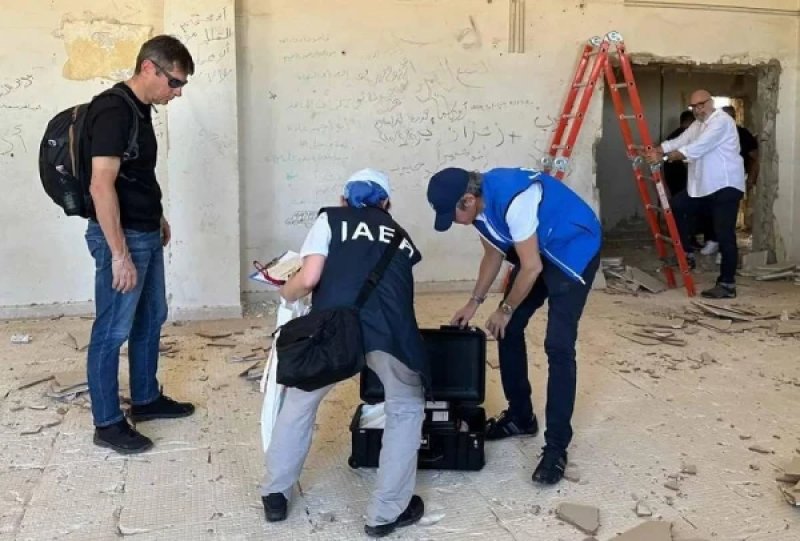
New details were reported on September 7 by Rafael Grossi, the Director General of the IAEA, at a meeting of the agency's Board of Governors in Vienna. According to him, the design and technical specifications of the reactor under construction allowed for the efficient production of fissile material that could potentially be used for the manufacture of nuclear weapons. Grossi emphasized that it is impossible to judge the ultimate intentions of the Syrian leadership. This concerns a secret reactor in the Deir ez-Zor province, which was destroyed by Israeli airstrikes in 2007. For a long time, Damascus denied the existence of an undeclared nuclear program. The IAEA has now definitively established that a gas-cooled reactor with a graphite moderator was indeed being built at this site. It was previously assumed that North Korea had assisted in its construction. ## Uranium Hidden Behind Walls The circumstances of the current discovery are particularly unusual. After the fall of Assad's regime, the new Syrian authorities began cooperating with the IAEA and informed the agency about an unknown facility. During an inspection in August, specialists had to dismantle walls and navigate narrow passages to reach the hidden nuclear material. Numerous containers of natural metallic uranium were found there. The IAEA confirmed the presence of about 73 tons of natural metallic uranium. Of this, approximately 55 tons were in the form of fuel rods, while the remainder consisted of uranium scrap and waste. Reuters specifies that the fuel for the reactor was produced directly in Syria. Currently, all discovered material is under the control and observation of the IAEA. Cameras have been installed at the site. Importantly, the 73 tons found is natural uranium, not weapon-grade highly enriched uranium. On its own, it is not a ready material for an atomic bomb. However, a reactor of this type could potentially produce plutonium from irradiated fuel, suitable for the creation of nuclear weapons.
