

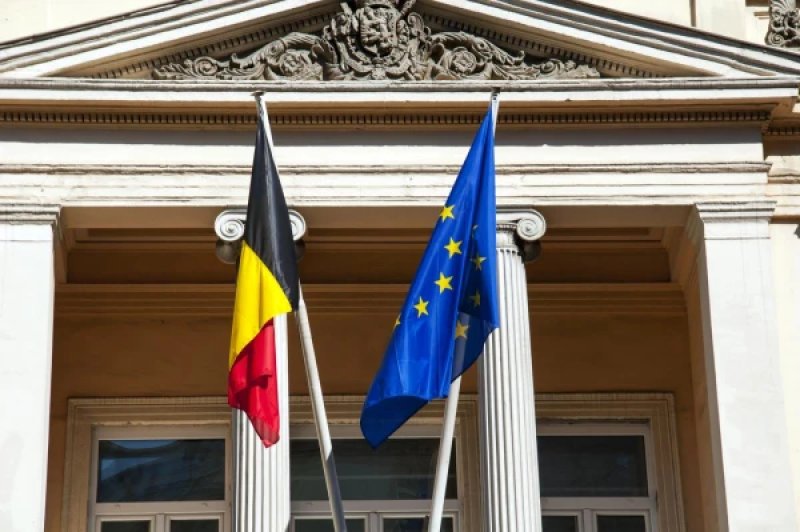
He reminded that there are more than 210 billion euros of frozen Russian assets, the overwhelming majority of which are held in Euroclear in Belgium. "We absolutely understand when the Belgian side says that a collective solution is necessary to distribute responsibility," emphasized Tikhiy. According to him, in this case, responsibility will not be placed on one national government – the Belgian one, since a decision of this scale should be collective. The spokesperson for the Ukrainian Foreign Ministry emphasized that a decision must be made. At the same time, he noted that Ukraine has a proposal that has already been conveyed to the European side. Tikhiy emphasized that the decision on the use of these funds should be made collectively with the distribution of responsibility among all EU governments, not just the Belgian one. He added that the funds should be used for defense, resilience, and recovery needs of Ukraine. **The Issue of Frozen Russian Assets** As reported by the Ukrainian news agency UNIAN, Belgium firmly opposes the use of frozen Russian assets to support Ukraine. Sweden, Poland, the Netherlands, and Spain have urged the European Commission to explore new ways to access about 200 billion euros of frozen Russian assets to support Ukraine. Belgian Defense Minister Theo Francken stated that this is not up for discussion and "the doors are closed." At the European summit in December 2025, Belgian Prime Minister Bart De Wever blocked an initiative from Germany and the European Commission to provide Ukraine with a "reparations loan" of 210 billion euros, arguing that this would expose the country to legal sanctions from Russia, as the majority of assets are held in Euroclear in Belgium, UNIAN reports.
