

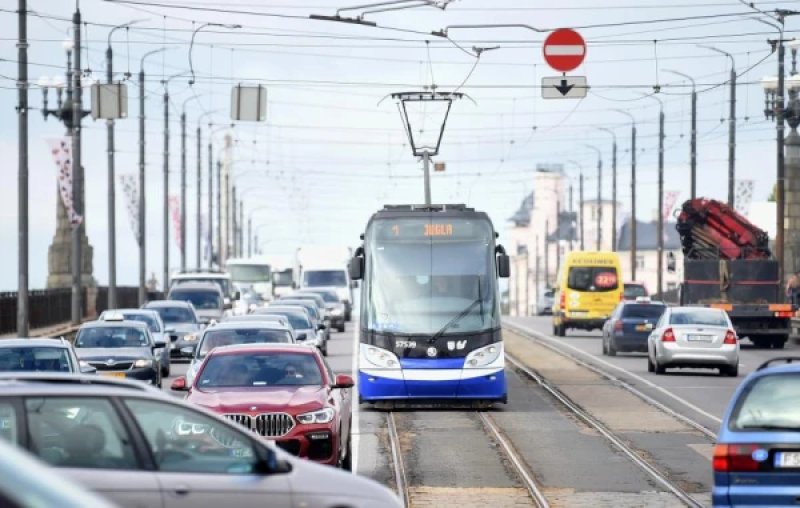
However, some residents claim that in practice, buses, trolleybuses, or trams cannot always compete with cars in terms of speed and convenience. The discussion on social media was sparked by a story from a Riga resident who was waiting for transport with a baby stroller near the Spice shopping center. After waiting for the bus and not seeing it, he decided to walk to Zolitūde. The bus arrived about half an hour later and was so overcrowded that getting on with a stroller would have been nearly impossible. "Once again, the car wins, especially for families," he summarized. Other participants in the discussion shared similar experiences. A resident of Grīziņkalns complained that in the morning she had to wait for the bus for about 20 minutes, and when it arrived, it was full. A resident of the Riga suburbs noted that in his case, public transport is not a convenient alternative at all. In the mornings, he drives his wife to Marupe and then passes by Spice on his way to work. According to him, transferring to the bus makes little sense if it travels on the same congested streets, and then you still have to walk from the stop. There are particularly many complaints about the connections with the western districts of the capital — Šampeteris, Zolitūde, and Imanta, as well as Piņķi. One resident mentioned that a trip from Ilguciems to Šampeteris by car usually takes 15–20 minutes, while a child needs about 45–50 minutes with a transfer between two types of public transport. Residents also complain about the insufficient number of trips, delays, and overcrowded buses. According to one Riga woman, during peak hours on her route, a small bus sometimes appears that fills up quickly, while a larger vehicle comes later when there are fewer passengers. However, there is also an opposing viewpoint in the discussion: the more people switch to public transport, the fewer cars and traffic jams there will be. The main question of the critics remains the same: how realistic is it to give up the car if a trip on public transport on some routes takes two to three times longer, and the transport itself can be late, overcrowded, or inconvenient for families with small children.
