

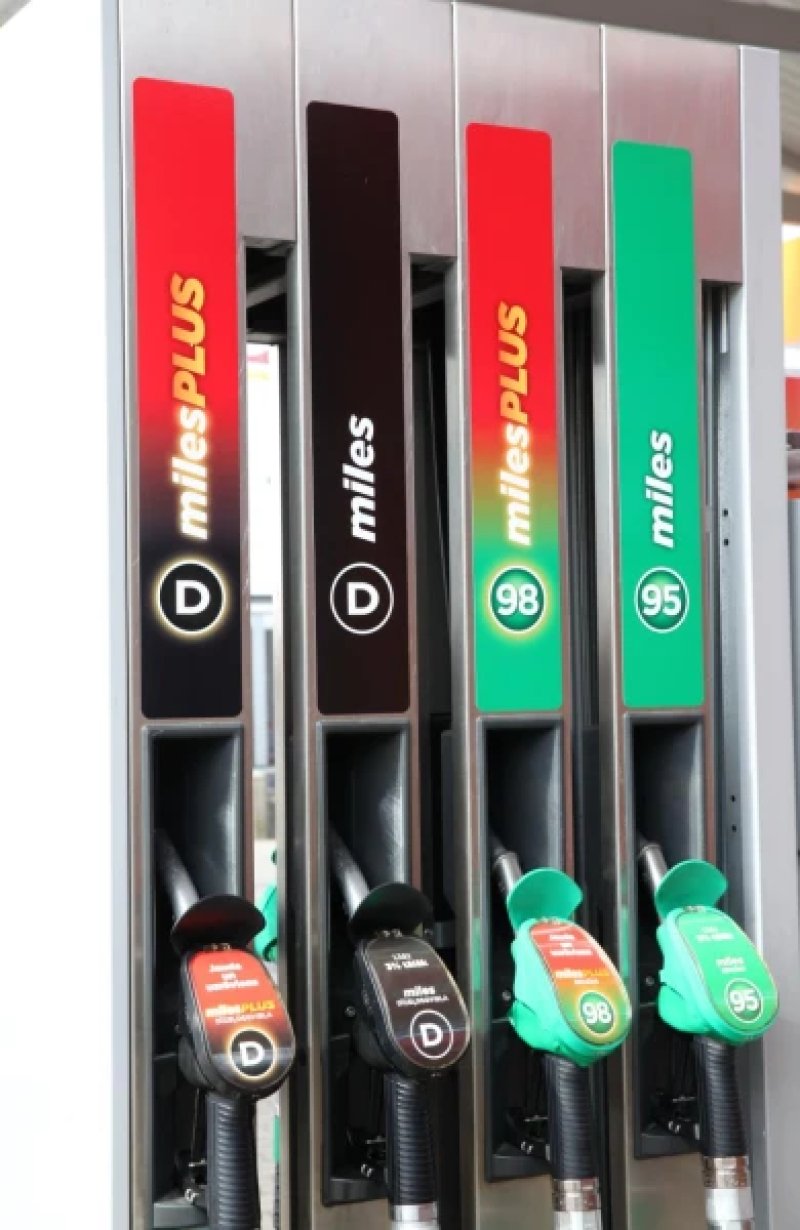
The Latvian TV news service has noted that fuel prices, primarily diesel, are approaching record highs. The current price level in historical terms is illustrated by the weekly average price report from the European Commission. The data showed that the highest weekly average price for diesel fuel in Latvia was in April of this year — 2 euros and 12 cents per liter. For 95-octane gasoline, the record has been held since June 2022 — 2 euros and 10 cents. Prices have not yet reached previous highs, but they are rapidly approaching that level. Latvian fuel prices largely follow the international wholesale market, so as long as there is price pressure globally, a sharp decline is not expected here. "There has been a trend of rising global prices since the beginning of July. This coincided with the end of the fragile truce between the USA and Iran. The more escalations occur in this region, the more and faster these prices begin to rise globally and, consequently, at our gas stations. We can also observe that prices have an upward trend," said Ieva Ligere, Executive Director of the Latvian Association of Fuel Traders, in an interview with LTV. This year, the cost of diesel fuel has risen particularly sharply, despite the fact that a reduced excise tax rate has been applied to it this year. Currently, the problem is not only the price of crude oil. The price of finished diesel fuel has increased significantly. Therefore, the price at the pump may rise more than one might expect based solely on the price of oil. Brent crude oil is currently priced at around 100 dollars per barrel. The market price of European diesel fuel, converted to the same measure, is almost twice as high. Consequently, a significant portion of the price increase occurs after oil extraction — at the refining stage. "There is simply a lack of refining capacity in the world. There are several reasons for this. Some of this capacity is still behind a fence or a virtual fence in the Persian Gulf. Ukrainians have successfully launched various drones, hitting different locations. Consequently, Russian refining capacity is decreasing by 3.4 million barrels per day. That’s a lot, and each million barrels per day accounts for 1% of global oil consumption," explained Peteris Strautinsh, Chief Economist at Luminor Bank. At the same time, traders emphasized that there are currently no issues with the availability of fuel in Latvia. Supplies are proceeding as usual. Thus, we hope for the best but prepare for the worst.
