

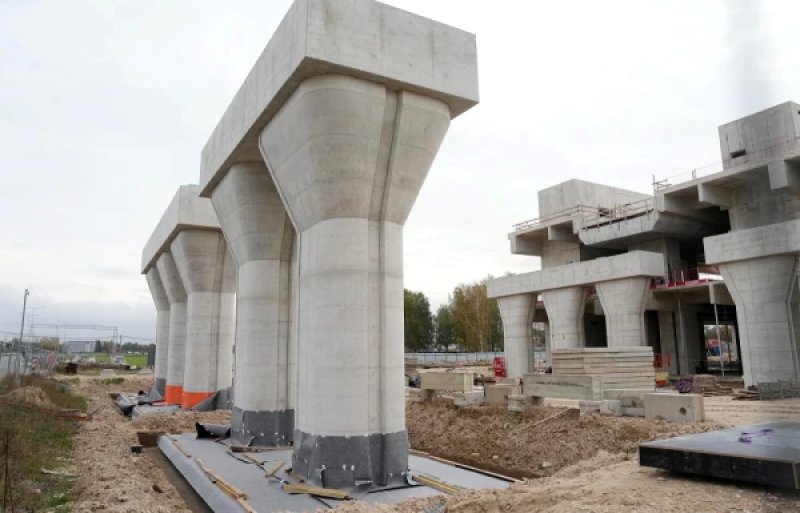
 Foto: BB.LV / rail baltica
To implement European cross-border railway projects, including Rail Baltica, predictable and long-term funding from the European Union is necessary. This was stated by the chairman of the board of the Baltic joint venture RB Rail, Marko Kivila, during a discussion in the European Parliament in Brussels, as reported by LETA. The discussion organized by the Community of European Railway and Infrastructure Companies (CER) gathered representatives from EU institutions, member states, and major railway projects in Europe to discuss the future funding of transport infrastructure within the next multiannual financial framework of the European Union. According to Kivila, more than 40% of the main Rail Baltica route in the Baltic countries has already been handed over for construction. In Estonia, 103 kilometers of the highway are being built, in Lithuania — 114 kilometers, with the first 8.8 kilometers already having tracks laid. In Latvia, work is underway on approximately 30 kilometers of the priority section of the main route. He noted that the construction of key infrastructure facilities has already begun, the design of the electrification system is ongoing, and equipment for train traffic management and signaling is being procured. As construction work expands, Kivila emphasized that the main task is to maintain the pace of project implementation. Rail Baltica should connect Estonia, Latvia, and Lithuania with Poland and the European standard gauge railway network, while simultaneously strengthening transport connectivity, logistics resilience, and military mobility on NATO's eastern flank. To date, approximately €5.19 billion has already been secured for the project, of which €4.46 billion comes from the European Union. According to the head of RB Rail, in the next EU financial period, strong support for the project through the Connecting Europe Facility (CEF) program must be maintained, the list of eligible expenses must be expanded, and a more flexible transition between financial periods must be ensured. "More flexible mechanisms for ensuring continuity of funding between consecutive EU budget periods would help avoid interruptions in project implementation, provide greater certainty in procurement and contracting processes, and allow for the maintenance of the already established construction pace," Kivila noted. He also emphasized the need for closer coordination between the European Commission, member states, and project implementers to avoid costly delays. According to Kivila, Rail Baltica is becoming not only a transport project but also a strategic one, as it simultaneously contributes to economic development, enhances the resilience of the transport system, and strengthens Europe's defense capabilities. Currently, negotiations on the next multiannual financial framework of the EU are ongoing. Discussion participants addressed how European funding could more effectively support large cross-border infrastructure projects in the future and accelerate the development of the Trans-European Transport Network (TEN-T).
