

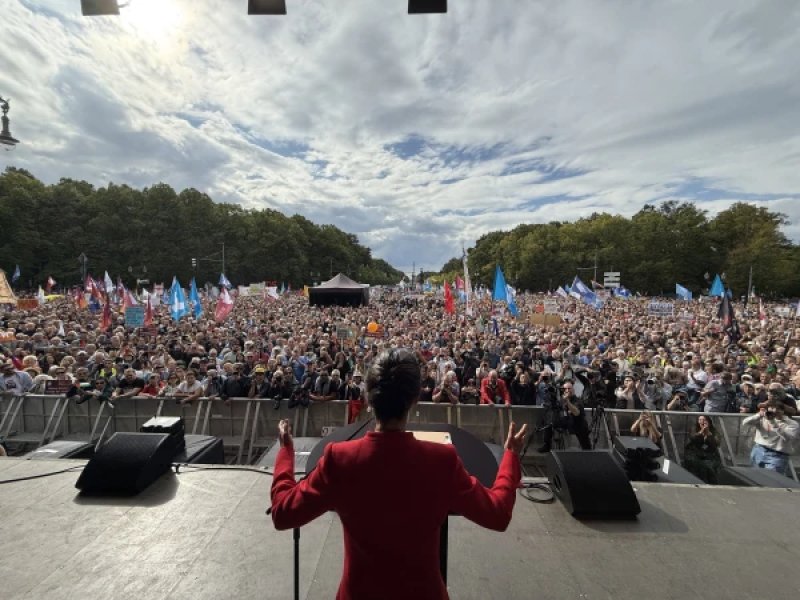
The political situation in the German federal state of Saxony-Anhalt is beginning to change after the victory of the Alternative for Germany (AfD) party in the state parliament elections. Three days after the voting, the Alliance of Sahra Wagenknecht (BSW) announced that it is ready to conduct negotiations with the AfD. This decision was made unanimously by the party leadership in Saxony-Anhalt. In the elections, the AfD received 43.8% of the votes, but this was not enough to secure an absolute majority in the Landtag. Despite this, the party hopes to form a state government, and its candidate Ulrich Sigmund intends to become the first prime minister of the federal state from the AfD. BSW representatives emphasized that the negotiations do not mean the creation of a coalition. According to them, the meeting is planned to discuss issues related to energy, education, and foreign policy agenda. This step is an exception against the backdrop of the position of other parliamentary parties. The Christian Democratic Union (CDU), the Social Democratic Party of Germany (SPD), the Greens, and the Left Party previously refused to negotiate with the AfD, maintaining the so-called "sanitary cordon" around this political force. This term refers to the practice where other parties exclude cooperation with a certain political force, even if it has received significant voter support. Previously, BSW also ruled out the possibility of forming a coalition with the AfD but allowed for the option of cooperating with a minority government if it is formed by this party. The reasons for the refusal of the other political forces remain the same. SPD representatives cited principled political and ideological disagreements. The Greens stated that they are not ready to discuss the future of the federal state with the AfD, while the Left Party emphasized that it sees no grounds for dialogue with a political force it accuses of discriminatory policies. The CDU also confirmed that it does not intend to cooperate with the AfD. The party reminded that the Federal Office for the Protection of the Constitution of Germany classified the AfD as a confirmed right-wing extremist organization. Before the elections, the AfD leadership stated that it would form a government only if it received an absolute majority. After the voting, the position changed: the party invited the other factions to negotiations on possible options for forming a government. The AfD itself stated that it does not intend to rush into negotiations and will announce the results when there is specific information available. Die Mehrheit der Menschen in Sachsen-Anhalt wünscht sich Veränderung. Wir nehmen diesen Auftrag ernst. Deshalb werden wir mit der AfD über Anträge zu Themen sprechen, für die uns die Bürger gewählt haben und die BSW und AfD ähnlich sehen. Sachsen-Anhalt, vor allem der… pic.twitter.com/RjGFtSD96a— Sahra Wagenknecht (@SWagenknecht) September 9, 2026
