

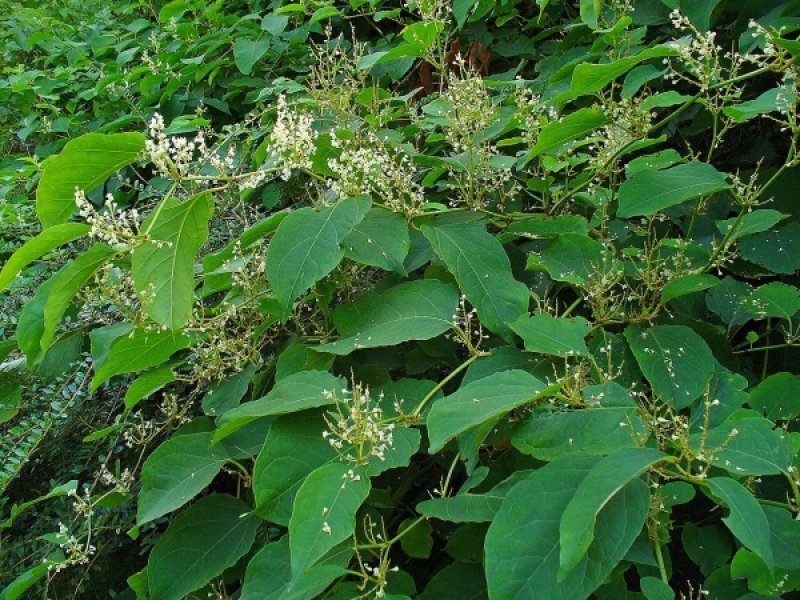
The Jelgava municipality warns about the spread of Japanese knotweed — an invasive plant that is considered one of the most dangerous for nature and urban infrastructure in Europe. According to the municipality, the plant has already been found in several areas of the city. The largest clusters are located in the vicinity of Slokas Street and Meiju Road, as well as near the intersection of Meiju and Atmodas Streets. Authorities urge residents and landowners to report sightings of knotweed by calling 8787. The information gathered will help create a map of the plant's distribution and provide data to the State Plant Protection Service. Knotweed is dangerous because it spreads very quickly and displaces native plant species. It easily takes over both abandoned and well-maintained areas, and it is significantly more difficult to combat than ordinary weeds. A particular problem is its powerful root system. Experts note that the roots of knotweed can lift paving stones, damage road surfaces, and deform asphalt, which can cause serious economic damage. As of June 17, 2025, Japanese knotweed has officially been included in the list of invasive species of the European Union. This means that municipalities are required to monitor its spread, and landowners are recommended to take measures for its eradication. Completely getting rid of the plant is not easy. It reproduces not only through rhizomes but also through small fragments of roots and stems. Even a tiny remaining piece can give rise to new shoots. Therefore, specialists advise against throwing dug-up plants into compost. They should be stored in airtight bags or containers until they completely lose their viability. After working with the plant, it is important to thoroughly clean clothing, shoes, and tools to avoid accidentally transferring plant parts to other areas. Additionally, it is not recommended to move soil from infested areas, as viable rhizomes may be present in it. Even after the plant is removed, the area will need to be monitored for several years — new shoots may reappear. In addition to Japanese knotweed, Sakhalin knotweed and Bohemian knotweed are also found in Latvia. Both species are also recognized as invasive at the European Union level. Their cultivation is prohibited, and their spread is subject to mandatory restriction.
