

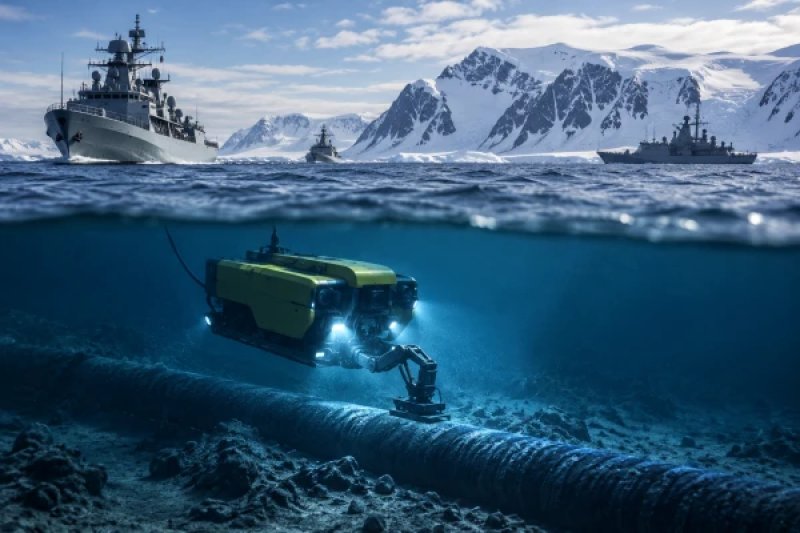
According to Reuters, the operation was conducted by the Main Directorate for Deep-Sea Research of the Russian Ministry of Defense (GUGI). Russian deep-sea vehicles simulated the use of technology that could be employed to damage critically important underwater infrastructure in a way that would complicate the identification of the responsible party in the event of a conflict. British, Norwegian, and U.S. forces monitored the Russian vessels. At one point, the allies confronted them at sea, after which the Russian side was unable to complete the exercises and left the area. There was no actual damage to the undersea cables. The UK and Norway had reported in April about the detection of covert GUGI activities in Arctic waters. However, there had been no prior reports of the alleged testing of new technology, nor that the operation took place near Svalbard, nor of U.S. involvement. According to sources from Reuters, representatives from the UK and Norway simultaneously informed Moscow that they were aware of the new technology. Thus, the allies aimed to demonstrate their ability to detect such operations and deter Russia from conducting them. "We sent a clear signal to Russia that it cannot act covertly," said Norwegian Defense Minister Tore Sandvik. He stated that Moscow was made clearly aware that attempts to attack critical infrastructure would be detected and would have consequences. The Russian Ministry of Defense did not respond to Reuters' request for comment on this information. The Kremlin has repeatedly denied conducting sabotage operations in NATO countries and preparing for conflict with the alliance.
