

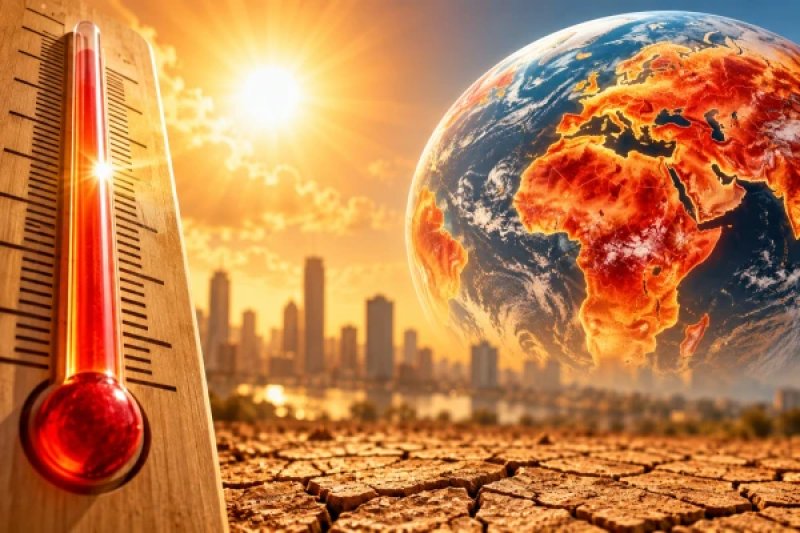
The average air temperature on the planet reached **16.96 °C — 1.65 °C above the pre-industrial level of 1850–1900**. This is the first month since November 2025 when the global temperature has exceeded +1.5 °C again. It is particularly unusual that August was even slightly hotter than July — this has occurred only a few times in the ERA5 dataset. A record has also been set for ocean surface temperatures outside polar regions: in August, it averaged **21.07 °C**, and on August 24–25, it rose to a historic maximum of **21.11 °C**. One of the reasons is the rapidly strengthening El Niño in the Pacific Ocean. Another notable result: **the summer of 2026 became the hottest on record in Western Europe**, surpassing even the famous hot summer of 2003. Record or near-record temperatures were observed in France, Spain, the United Kingdom, Belgium, Italy, and other countries. Scientists find it particularly alarming that the record heat affected not just a single region, but a significant part of the planet. High temperatures were accompanied by droughts, wildfires, and extreme precipitation in various countries. Copernicus experts emphasize that one record month alone does not signify a permanent exceedance of the threshold of 1.5 °C established by the Paris Agreement; however, a prolonged series of temperature records indicates a persistent trend of global warming.
