

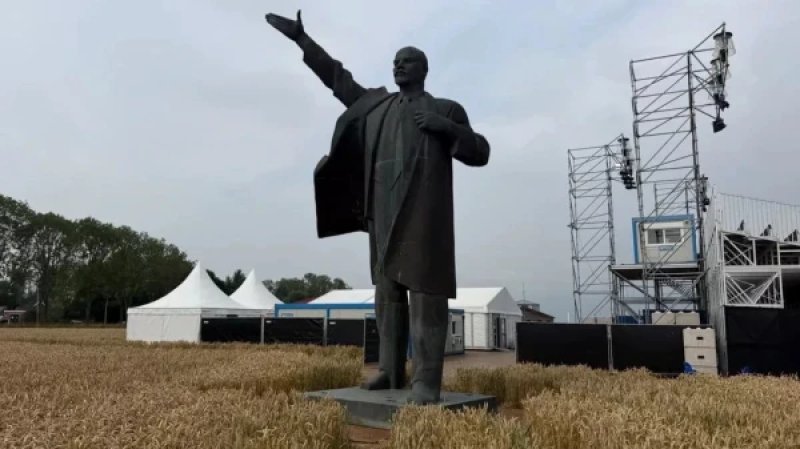
The monument has an unusual history. Until 1991, it stood in the East German city of Merseburg near Leipzig. After the dissolution of the GDR, the statue was dismantled, and in the late 1990s, it was purchased by an entrepreneur from the Dutch province of Groningen. In the following years, the monument was repeatedly transported and provided for various projects, as reported by NOS. As previously reported by bb.lv, in recent weeks Lenin was located in Oostwold, where the nine-meter figure was used as a decoration for a musical theater production. After the performances concluded, the statue was to be left near the historical heritage center being created, which would tell the story of the spread of communist ideas in the eastern part of Groningen province. However, the plans sparked controversy. The installation of the monument was discussed on social media, and representatives of the local CDA party sent official inquiries to the authorities. As a result, the municipality decided not to issue the permit. "Everyone should feel at home in Oldambt and feel welcomed here, and this monument provokes too many reactions," explained a representative of the municipality to the regional RTV Noord. Moreover, the authorities consider the nine-meter statue too tall. However, the applicants have the right to appeal the decision. ## "We Did Not Intend to Glorify Lenin" Henrietta Davelaar, the initiator of the historical center, stated that the municipality's decision came as a surprise to her. According to her, negotiations with the local authorities had been ongoing for quite some time, so she expected to receive the permit. Davelaar emphasizes that the installation of the monument was not intended to glorify Lenin. An informational plaque was planned to be placed next to the statue, explaining the historical context. According to her, Lenin and the communist movement are directly related to the history of Oldambt. In the 19th century, the eastern part of Groningen was known for the stark social inequality between wealthy landowners and poor agricultural workers. Harsh working conditions repeatedly led to protests. Later, communist ideas gained significant support here. "I completely understand that this monument provokes a reaction because terrible things happened under Lenin. But the fact remains: Lenin and communism had significant support in Oldambt," explains Davelaar. In her opinion, uncomfortable pages of the past cannot simply be erased from history. On the contrary, the monument could serve as a reason to discuss why communist ideas once became so popular in this part of the Netherlands. ## No Lenin, No Museum? The municipality's refusal could jeopardize the entire project of the historical center, which its initiators have been working on for several years. Davelaar claims that the giant monument was to be the main attraction of the future center. "We needed an object that would attract the public. If there is no monument, then there will be no information center," she stated. The organizers intend to appeal the refusal, although they hope to reach an agreement with the municipality. On October 7, the issue of the monument is to be discussed at a meeting of the Oldambt municipal council. However, the final decision on issuing the permit is made by the local executive authority.
