

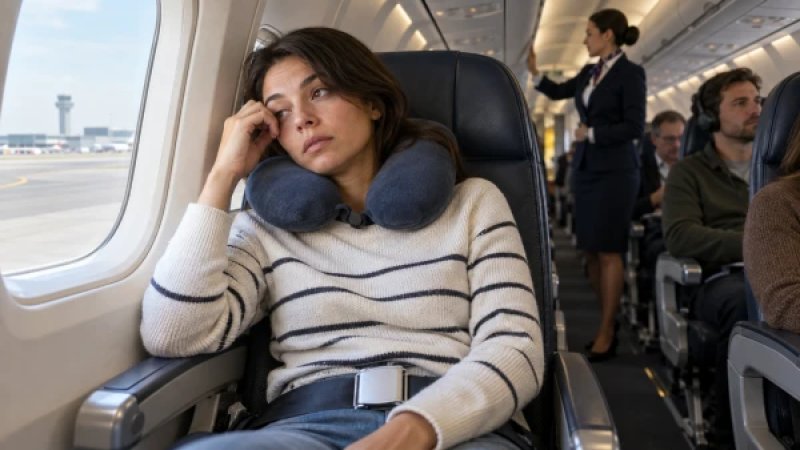
# Don’t Rush to Fall Asleep: Flight Attendant Warns About a Dangerous Habit on a Plane A tiring journey to the airport, queues, security checks, and flight delays can drain your energy even before the trip begins. Therefore, once seated on the plane, many passengers immediately close their eyes. However, flight attendant Ale Pedrosa from Orlando advises against sleeping before the aircraft takes off. She published her warning on social media, and her recommendations caught the attention of the British publication Express. There are several reasons for such advice. ## It’s Important to Hear Crew Commands Taxiing, takeoff, and landing are among the most critical phases of a flight. Passengers need to remain conscious to quickly understand and follow crew commands in case of an emergency. Before takeoff, flight attendants check that seatbelts are fastened, seat backs are upright, trays are stowed, and aisles are clear. It is more challenging to alert or prepare a deeply sleeping passenger for a possible evacuation. “It is essential to be fully aware of what is happening and to stay alert in case of an emergency,” Pedrosa explained. Similar recommendations from flight attendants are also reported by the Times of India. This does not mean that sleeping on a plane is prohibited. After reaching cruising altitude, a passenger can rest if they adhere to safety requirements and remain accessible to the crew. ## Sleeping Can Increase Ear Pain During ascent and descent, cabin pressure changes. Typically, a person instinctively swallows, yawns, or moves their jaw to help equalize pressure between the middle ear and the environment. Such movements occur less frequently during sleep. As a result, a passenger may experience congestion, pain, or what is commonly referred to as airplane ear. The CDC confirms that rapid changes in pressure during ascent and descent can lead to barotrauma of the ears and sinuses. Mayo Clinic specialists explicitly recommend not sleeping during takeoff and landing to be able to equalize pressure in a timely manner. To reduce discomfort, one can: * swallow saliva or drink water in small sips; * yawn; * chew gum; * carefully perform the Valsalva maneuver: pinch the nose, close the mouth, and gently try to exhale; * use special filtering earplugs. If a person is flying with a cold, nasal congestion, sinus inflammation, or ear problems, the risk of discomfort may be higher. ## Avoid Leaning Against the Window Flight attendants also advise against sleeping with your head directly against the wall or window. A passenger does not know how many people have touched that surface with their hands or leaned their face against it. For sleeping, it is better to use your own travel pillow. It supports the neck and creates a barrier between the face and cabin surfaces. ## How to Sleep More Safely During a Flight Before sleeping, ensure that the seatbelt is fastened and clearly visible over the blanket. This way, crew members won’t have to wake the passenger during checks. The bag should be completely stowed under the seat or in the overhead compartment, and arms, legs, and the edge of the blanket should not protrude into the aisle. On long flights, it is beneficial to periodically get up and stretch your legs if permitted by the crew. Taking strong sleeping pills without consulting a doctor is not recommended. It is especially dangerous to combine sedatives with alcohol: a person may be difficult to wake, and after waking, they may find it harder to orient themselves and follow instructions. Sleeping on a plane is possible; however, it is better to wait until after takeoff. During taxiing, ascent, and landing, it is safer to remain conscious: this helps to respond more quickly to crew commands and reduces the risk of ear problems. A few minutes of wakefulness can make the flight noticeably more comfortable and safer.
