

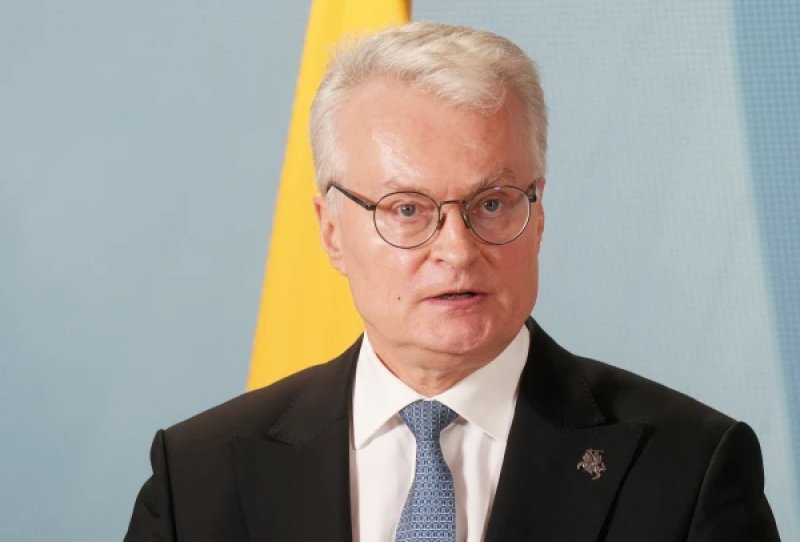
Speaking at the European Arctic Summit in Rovaniemi, Finland, Nausėda stated that security issues in the Baltic Sea and the Far North should be viewed as parts of one common problem. "It is important to ensure a unified approach to security issues, whether we are talking about the Arctic or the Baltic Sea. The main issue is the aggressive behavior of Russia. We are seeing an increase in incidents across Europe, and there is no reason to expect that anything will change in the coming months," the Lithuanian president told reporters. The summit is taking place on September 13–14. Participants are discussing the formation of a common European strategy regarding the Arctic, the significance of which is rapidly growing against the backdrop of the opening of new maritime routes, the struggle for natural resources, and the increasing military activity of Russia. ## China Strengthens Its Presence in the Arctic Nausėda also noted the growing activity of China in the region. While it is currently mostly related to scientific research, he believes it may later take on a military character. "It is also important to pay attention to the increasing presence of China in the Arctic region. Its footprints are already noticeable here. While this is more related to scientific research for now, military activity or a military footprint may emerge in the region later," emphasized the President of Lithuania. He believes that the European Union needs to reconsider its Arctic policy, established in 2021, in light of the current geopolitical situation and new threats. Nausėda places special importance on the interaction between the EU and NATO. According to him, the two organizations should not duplicate or complicate each other's work: the actions of the European Union should complement the efforts of the North Atlantic Alliance and contribute to strengthening its presence in the region. Europe, in the opinion of the Lithuanian leader, must enhance economic resilience and develop the necessary infrastructure. NATO, in turn, should increase its military presence and expand its capabilities for deploying forces in the Arctic. ## The Main Task — Deterring Russia Nausėda called reliable deterrence the main condition for security. "If we are reliable, active, and capable of responding, we can ensure a sufficient level of deterrence so that Russia does not attempt to test our defense capabilities," he stated. The President of Lithuania emphasized that Russian provocations occur not only in the Baltic states or Poland but also in Germany and other European countries. In his assessment, Moscow's actions are directed against all of Europe, not against individual geographic regions. Russia, according to Nausėda, is trying to test the strength of the European rule of law, democracy, and the way of life. "It would be naive to expect that there will be no malicious actions from Russia in the Arctic," added the Lithuanian leader. The meeting in Rovaniemi brought together leaders from several EU countries and representatives of European institutions. The main goal of the summit is to strengthen the common strategic approach of the European Union to the Arctic and to define the role of the region in the European security system. The agenda for Nausėda's visit also includes a meeting with Finnish Prime Minister Petteri Orpo and a visit to the Patria facility, which produces armored vehicles. The Arctic is increasingly linked to the security of the Baltic states: both regions are part of a unified northern NATO space and face similar threats — military activity from Russia, risks to critical infrastructure, and increasing geopolitical competition. Therefore, Vilnius calls for the simultaneous development of the EU's civil infrastructure and the alliance's military capabilities.
