

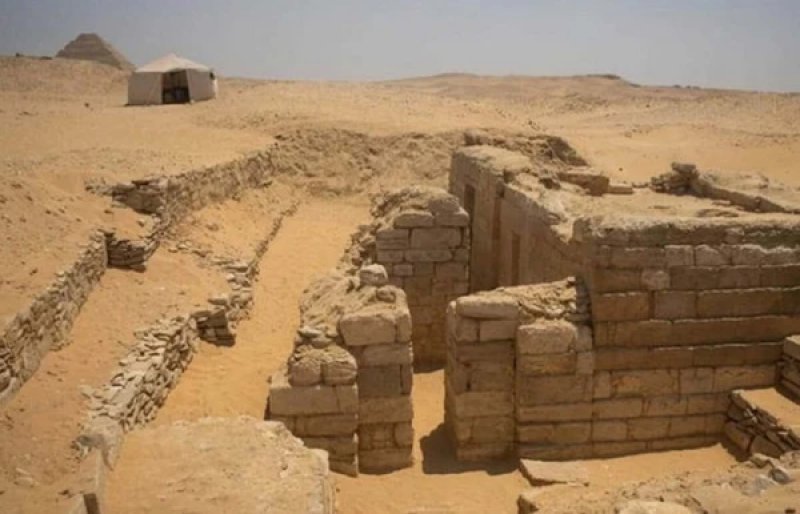
The burial complex is believed to date back to the late Fifth Dynasty of the Ancient Kingdom. The find has attracted researchers' attention not only because of its age but also due to the unusually good preservation of the architecture and interior decoration. One of the main features of the complex is two spacious chapels. Their walls are covered with numerous reliefs that depict the daily life of ancient Egyptians. The stone slabs illustrate agricultural work, scenes from the lives of the inhabitants of the Nile Valley, as well as processions with offerings intended for deceased dignitaries. But what surprised archaeologists the most was the condition of the paints. The mineral pigments used by the artisans to color the images around four and a half thousand years ago have retained their original colors in many places. Such preservation is considered rare for monuments of this age. The discovery was made in the Saqqara area, one of the most important archaeological complexes in Egypt. The vast necropolis was used for many centuries and continues to yield new discoveries for researchers. The burials, temples, and other structures found here allow scientists to trace how architecture, religious beliefs, and burial traditions changed in Ancient Egypt. Work in the new tomb is not yet complete. Archaeologists are conducting detailed photographic documentation of the finds and mapping the rooms, while restorers are attempting to stabilize the preserved colorful layers to protect them from environmental impact. The next step will be cataloging the found elements and studying the inscriptions. They may help establish who the burial complex belonged to, as well as provide additional information about the people who lived in Egypt during the Fifth Dynasty. For researchers, the value of the find lies not only in its age. The well-preserved images effectively turn the walls of the tomb into a kind of illustrated chronicle of life in Ancient Egypt, allowing us to see scenes created by artisans around 4,400 years ago.
