

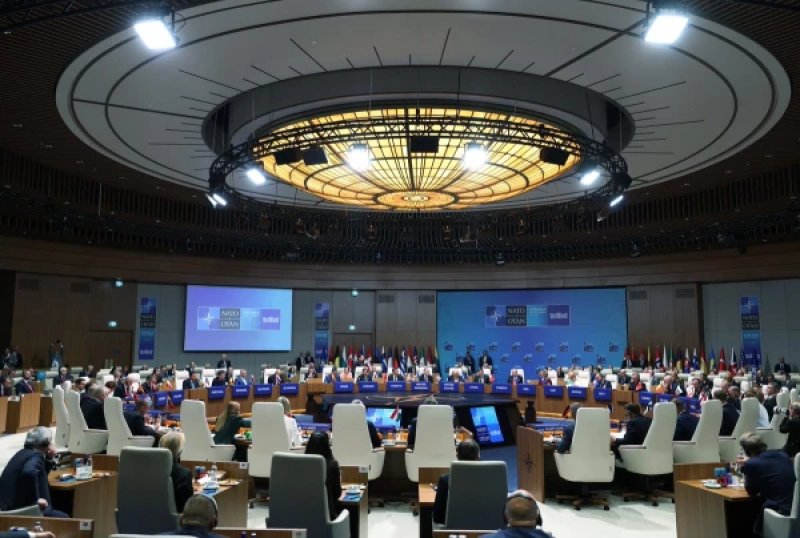
Chairman of NATO's Military Committee Admiral Giuseppe Cavo Dragone stated that the alliance has fully prepared response plans for a possible escalation in the eastern direction. He made this announcement at a press conference following a meeting of NATO's Military Committee in Copenhagen. According to him, the plans concerning the eastern flank alone occupy about 4000 pages. They outline the decision-making process, troop deployments, and responses to various scenarios. "We have three plans for the eastern direction to be ready for any possible escalation," Dragone noted. He emphasized that NATO is preparing for a wide range of scenarios — from hybrid attacks and local crises to situations that would require the application of Article 5 of the North Atlantic Treaty on collective defense. The admiral stated that the command structure has already been established, the necessary forces are on standby, and decision-making procedures are maximally standardized to reduce response time. For the countries on the eastern flank, this means that the actions of allies are pre-planned and coordinated. Such plans are regularly updated and are part of NATO's overall collective defense system. In response to a question about the possibility of a Russian strike on the Polish-Ukrainian border area, Dragone stated that NATO does not consider such a development a realistic scenario, although it is closely monitoring the situation and taking into account the risk of escalation in military planning. He also noted that hybrid attacks do not automatically imply the application of Article 5, as they usually remain below the threshold that would warrant a collective military response. Significant attention, according to the head of the Military Committee, is currently being paid to increasing stocks of weapons and ammunition. The experience of the war in Ukraine has shown an extremely high consumption of ammunition, so NATO is urging the defense industry to ramp up production more quickly. "Funding will be provided. Now it is necessary to accelerate supply capabilities," Dragone stated. A separate area of work remains the strengthening of the eastern flank through air defense systems, drones, and counter-drone measures. Additionally, the alliance continues to focus on protecting critical infrastructure and countering hybrid threats, including potential sabotage against defense industry facilities. Dragone's remarks came just days after reports of drone strikes near the Polish-Ukrainian border. Polish authorities stated at that time that the country's airspace had not been violated; however, the incident once again drew attention to security issues on NATO's eastern flank.
