

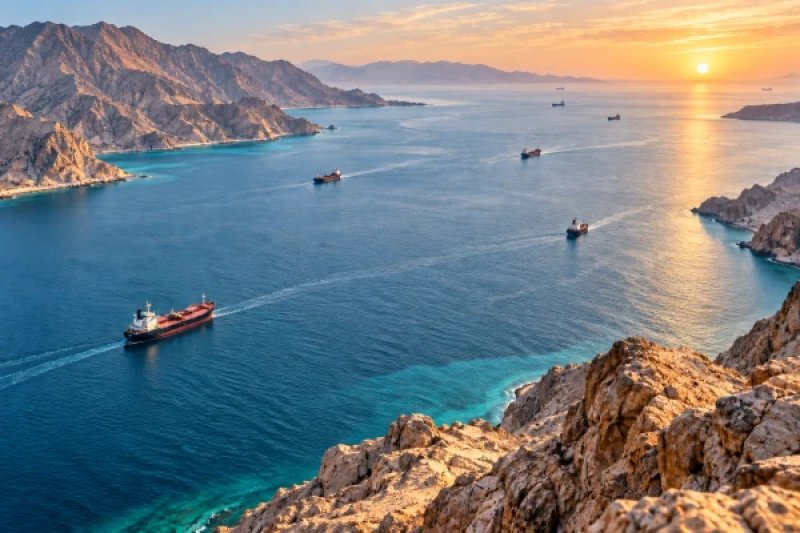
According to Reuters, published on September 21, 12 vessels carrying cargo passed through the Strait of Hormuz over the past weekend. The previous weekend, there were 35. Thus, the visible shipping flow for the week has decreased by almost two-thirds. The scale of the decline is particularly noticeable compared to the pre-war period. Before the current crisis, about 125 large commercial vessels, including oil and gas tankers, container ships, and bulk carriers, passed through Hormuz daily. Approximately one-fifth of the world's oil and liquefied natural gas supplies were transported through this narrow maritime corridor. ### Some Tankers are Becoming "Invisible" However, the figure of 12 vessels does not mean that only 12 ships literally crossed the strait in two days. The statistics are primarily based on data from the Automatic Identification System (AIS). Some vessels, fearing attacks or seeking to conceal their routes, turn off their transponders. Such tankers may not appear in the usual shipping statistics. Reuters has previously recorded similar "dark" passages through Hormuz. Therefore, the actual movement through the strait is somewhat higher than what open monitoring systems show. ### Oil is Still Flowing A paradoxical situation has arisen: the number of visible vessels remains extremely low, but oil exports from some countries in the region are recovering. Reuters reports that shipments from Saudi Arabia in September rose **above 4 million barrels per day** compared to about 2.4 million barrels in August. Satellite data also indicate an increase in Saudi exports. At the same time, Riyadh is actively using an alternative route — the **East-West** pipeline, which allows transporting raw materials from fields in the east of the country to the port of Yanbu on the Red Sea, thereby bypassing the Strait of Hormuz. This is fundamentally important for the global oil market: the physical flow of oil has not decreased as dramatically as the number of vessels that can be seen on maritime traffic maps. ### Three Vessels in a Whole Day The current decline is not an isolated episode. **On September 16, 12 commercial vessels passed through Hormuz, and by September 17, there were only three**, according to vessel monitoring data provided by Reuters. One of the vessels took a route near the Iranian coast, while the other two tankers used so-called *dark transit* — passage with transponders turned off. In comparison, the average for the previous ten days was about 17 vessels per day. ### The Most Vulnerable Spot in the Oil Market The Strait of Hormuz connects the Persian Gulf with the Gulf of Oman and further with the Indian Ocean. At its narrowest point, the width of the shipping corridors is small, so any military actions in this area can quickly impact global energy resource supplies. Currently, the strait is formally still operational, but the usual commercial shipping through it has reduced to a small fraction of pre-war levels. And this is why the current statistics look unusual: one of the planet's most important maritime highways is not closed — but on the maps of vessel movements, it appears almost empty.
