

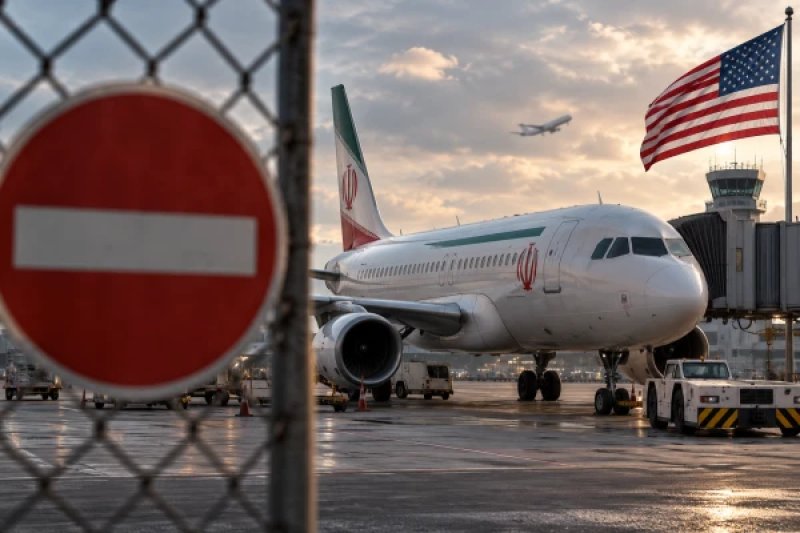
US Treasury Secretary Scott Bessent announced a sharp increase in pressure. In an interview with CNBC, he stated that as of September 23, Iranian airlines will be effectively blocked worldwide. The mechanism differs from a typical flight ban. The United States cannot directly order a foreign airport not to accept a plane from Iran. Instead, Washington intends to use secondary sanctions. According to Bessent, if an Iranian plane lands abroad, the companies servicing it must not provide fuel, ground services, or ticket sales. Otherwise, they risk facing American financial restrictions and losing access to the dollar system. ### The pressure is already working The new threats did not come out of nowhere. In early September, the US Treasury imposed sanctions on all remaining Iranian airlines that were not already under similar restrictions, as well as on companies servicing Iran's aviation sector. The consequences are already noticeable. One of Iran's largest airlines, Mahan Air, has suspended flights to Istanbul, Ankara, and Muscat. The Financial Times reported that about a third of the expected international flights to Iran on one day last week were canceled or did not take place at all. Turkey and Oman have also taken measures regarding Mahan Air flights after consultations with the US. Additionally, Turkish ground handling companies have begun terminating contracts with Iranian carriers. ### A plane may arrive — but how will it depart? This is where the peculiarity of the American strategy lies. There is currently no unified international ban that would legally close airspace to all planes from Iran. But if a carrier cannot refuel a plane, obtain ground services, and sell tickets, regular international flights become extremely complicated. Aviation experts warn that achieving a complete halt of all Iranian airlines will not be easy. Not every state will necessarily comply with Washington's demands, and controlling a vast number of airports and servicing companies presents a separate challenge. ### China becomes key The position of China — one of Tehran's main economic partners — takes on special significance. Bessent stated that Washington is negotiating with Chinese financial authorities, including the head of the People's Bank of China, Pan Gongsheng, about compliance with American sanctions against Iran. According to the US Treasury Secretary, the Chinese side is actively participating in these discussions. If major foreign airports, fuel suppliers, payment systems, and ground handling companies indeed refuse to work with Iranian carriers, Iran's international aviation could find itself in almost complete isolation — even without a formal closure of airspace by other states.
