

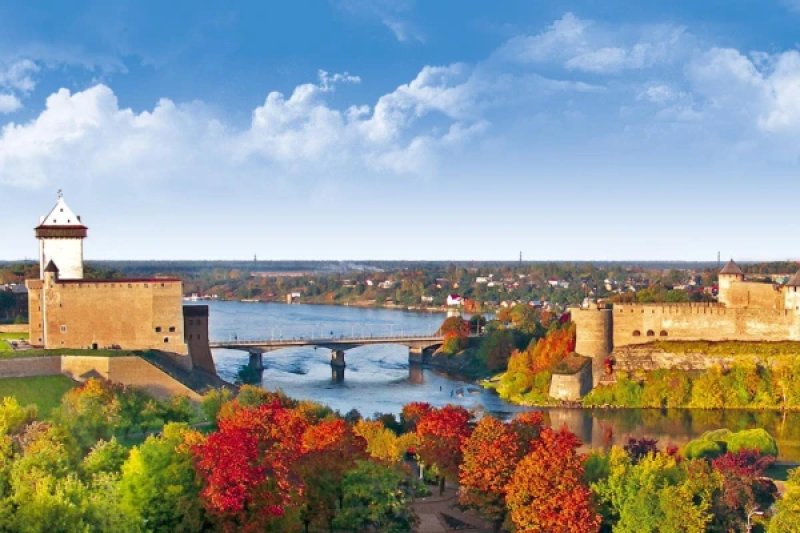
According to **ERR**, the measures were introduced by the Border Guard of the FSB for St. Petersburg and the Leningrad Region. The Russian side explained their necessity to prevent violations of border and migration regimes, as well as to protect aquatic biological resources. In a five-kilometer strip along the state border in the Kingisepp and Slantsevsky districts, it is prohibited to be and move outside populated areas during dark hours, including by transport. Hunting and carrying firearms are also prohibited there. Separate restrictions have been introduced on the Narva River. Until September 26, small vessels are prohibited from moving in the section between the rivers Bolshaya Cheryomukha and Kryusha. According to the Russian edition of ERR, south of the Narva Reservoir on the Russian shore, the presence of people near the water is also restricted. ## Estonia Was Not Officially Notified in Advance A representative of Estonia at the Russian-Estonian border reported that the Police and Border Guard Department was aware of the upcoming restrictions, but had not received official notification from the Russian side in advance. At the same time, Estonian border guards emphasize that such measures have been periodically introduced by Russia before — for example, during exercises or for preventive purposes. Moreover, the Russian border zone is regulated significantly more strictly than the Estonian one even in normal times. Therefore, Tallinn does not currently consider the introduced regime as evidence of an immediate threat to Estonia. ## What Is Happening with the Border Itself On the Estonian side, the regime also remains heightened. The border crossing points Narva-1, Koidula, and Luhamaa operate only from **7:00 to 19:00** — Estonia previously decided to extend the nighttime closure indefinitely. Authorities explain this by the need to strengthen border control and ensure more effective customs operations. At the same time, Estonia does not yet consider it necessary to completely close the border with Russia: the country's Ministry of Internal Affairs stated that the current threat assessment does not provide grounds for such a decision. ## Why the News Attracted Attention The scale of additional restrictions simultaneously in two border areas and at Narva is unusual. Against the backdrop of overall tension on NATO's eastern flank, any changes in border regime attract heightened attention in Estonia. However, there is currently no basis to assert that Russia is preparing to close the border or conduct a military operation. The official version from the FSB is border control and prevention of violations, and Estonian authorities do not record any direct threats. Until September 26, the Russian side has effectively tightened the already existing regime in the border zone around Ivanogorod, Kingisepp, and Slantsevo: movement is restricted at night, part of Narva is closed to small vessels, and hunting and firearms are prohibited. For Estonia, this is not yet a reason to close the border, but the actions of Russian border guards in the Narva region are being monitored particularly closely.
