

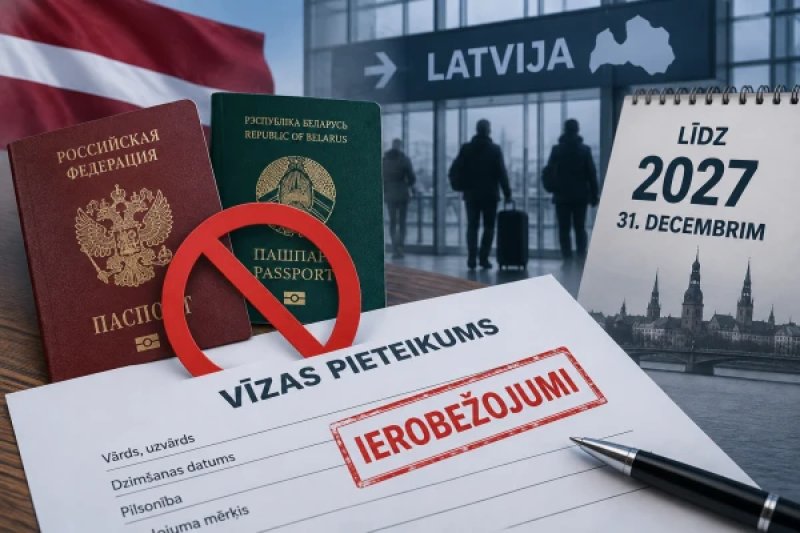
According to the Ministry of Foreign Affairs, Russian hybrid activities in Europe encompass the information and cyber environment, military and intelligence spheres, political and diplomatic tools, as well as the economic and legal environment. The ministry believes that such activities are primarily aimed at reducing support for Ukraine and countering measures to strengthen the security of the Baltic region countries. At the same time, the Ministry of Foreign Affairs notes: according to the assessment of Latvian state security services, the level of military threat to Latvia has not changed, and currently, Russia does not pose a direct military threat to the country. However, Russia's war against Ukraine and hybrid attacks against NATO allies, as the ministry points out, worsen the overall security situation in Europe. The Ministry of Foreign Affairs pays special attention to Belarus. The ministry indicates that Minsk supports Russia by allowing Russian armed forces to use the territory, infrastructure, and airspace of Belarus for the preparation and conduct of attacks. In addition, the Latvian foreign ministry accuses the Belarusian authorities of using the flows of illegal migrants across the borders of Latvia, Lithuania, and Poland as a tool for hybrid influence. The current rules provide for restrictions on the acceptance of visa applications and entry into Latvia for certain categories of citizens of Russia and Belarus until December 31, 2026. The Ministry of Foreign Affairs believes that the circumstances that led to the introduction of these measures have not disappeared, therefore it proposes to extend the restrictions until December 31, 2027. The project also provides for clarifying the legal basis for the restrictions in accordance with the new Immigration Law that came into force on September 15. The law allows the government to impose restrictions on the issuance of visas and entry of citizens from third countries, taking into account the possible impact on internal security, public order, international relations, and public health. Thus, this is not about introducing fundamentally new restrictions, but about extending for another year the existing regime for certain categories of citizens of Russia and Belarus. The main reason for this, according to the Ministry of Foreign Affairs, is the ongoing risks to state security.
