

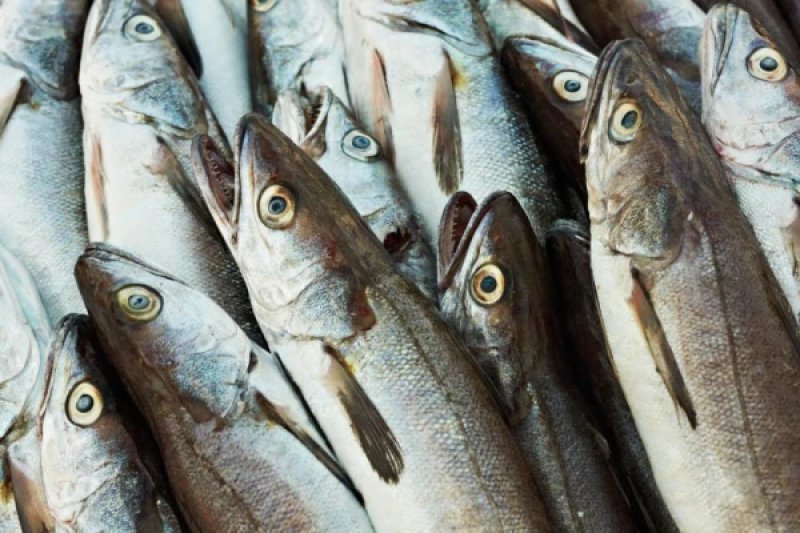
A recent study showed how human demand has effectively rewritten the evolutionary path of one of the most well-known commercial species. Scientists focused on a population in the Bornholm Basin of the Baltic Sea, where cod has long suffered from intensive fishing. From 1996 to 2019, researchers caught hundreds of fish, measured them, and reconstructed the growth patterns of each individual. To do this, they studied otoliths — small auditory bones whose layers, like the annual rings of a tree, allow for the determination of the fish's growth rates in different years. The results confirmed biologists' worst fears. In just twenty years, the average length of adult cod fell from over 40 cm to approximately 20 cm. It's not just overfishing: a deeper mechanism has come into play within the population. Industrial fishing primarily targets larger fish — they are more expensive and profitable. The tools and methods of capture are refined to catch these individuals, while smaller cod often slip through the nets or avoid capture. From the outside, this may seem reasonable: young fish are given a chance to grow and reproduce. But in practice, this strategy has turned into an unintended experiment in natural selection. From generation to generation, those who matured earlier and at smaller sizes had a greater chance of survival and leaving offspring. Scientists isolated and analyzed the DNA of cod caught in different years. It turned out that genetic variants associated with smaller body sizes and slower growth have become increasingly common over time. **A Troubling Situation** "From a scientific perspective, this is exciting, but from an ecological standpoint, it is alarming," emphasized co-author Professor Torsten Reusch. The genetic data tells a simple and unflattering story: years of fishing have directed the population toward traits that make it less resilient and simultaneously less valuable for fisheries. Today, the stocks of Baltic cod remain low. Even after the cessation of targeted fishing in 2019, there has been no significant increase in numbers. Returning the population to its former state will not be easy: a genetic shift cannot be reversed simply by banning fishing. Evolution, once turned in a new direction, rarely turns back quickly. According to scientists' estimates, it may take decades for larger cod to appear naturally, and possibly much longer — if it happens at all. The consequences of fishing preferences are already embedded in the biological structure of the species. The study shows that fishing can not only reduce animal numbers but also change the very nature of the population.
